
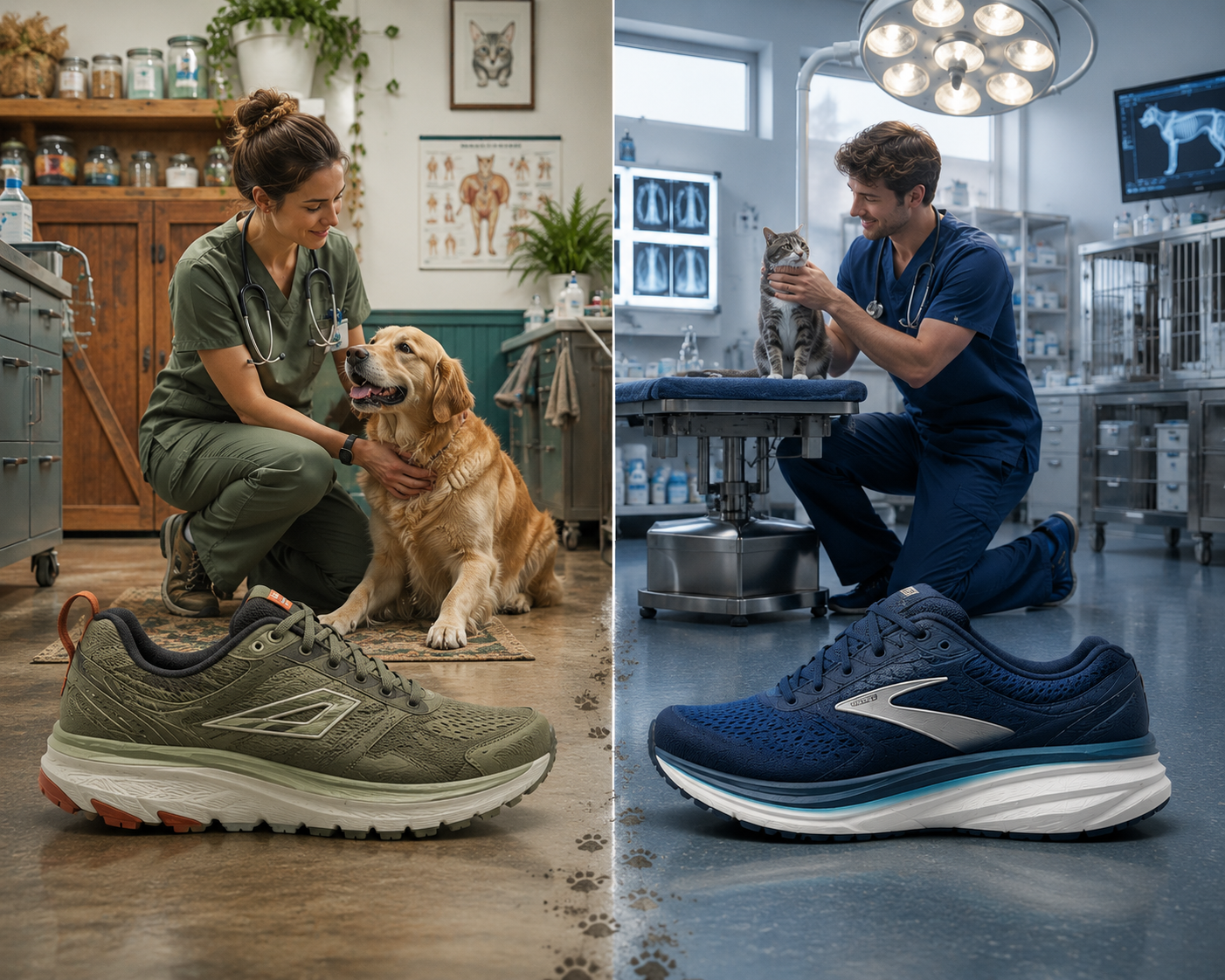
Altra vs Brooks for Veterinarians
Quick decision: Altra Torin 8 is the more distinctive option because of its zero-drop geometry and roomy toe box. Brooks Ghost 18 offers a more conventional 10 mm drop, balanced cushioning, and walking-oriented design. Neither is a veterinary-specific work shoe, so clinic rules on traction, cleanability, or protective footwear come first.
This comparison is research-based and does not claim a veterinary-clinic floor test or medical benefits.
Altra vs Brooks for veterinarians: quick comparison
| Priority | Start with | Why |
|---|---|---|
| Roomy toe box | Altra Torin 8 | Altra highlights its signature roomy toe box |
| Zero-drop platform | Altra Torin 8 | Classic Altra geometry |
| Traditional walking feel | Brooks Ghost 18 | 10 mm drop with balanced support |
| Clinic requires work-rated traction | Neither by default | Choose a verified occupational model |
For profession-specific options, browse the Veterinary Shoes hub. If the role involves a lot of walking outside treatment rooms, the Walking Shoes hub is also useful.
What veterinary work asks from footwear
Veterinary professionals may move between exam rooms, kennels, treatment areas, reception, and outdoor entrances. The shoe needs to fit securely during short turns and repeated walking, while the upper and outsole should make sense for the clinic’s cleaning and traction requirements.
A running shoe can be comfortable but still be the wrong occupational tool if the clinic requires a documented slip-resistant outsole or easier-to-clean upper.
Altra Torin 8
Altra describes the Torin 8 with a roomy toe box, zero drop, breathable mesh, and soft lightweight midsole. Altra lists the model for daily runs and walking.
The roomy forefoot is the most obvious reason a veterinarian may consider it. But zero drop is a distinct geometry, not a universal upgrade. Someone accustomed to a traditional heel-to-toe offset may need time to decide whether that platform suits them.
Brooks Ghost 18
Brooks lists the Ghost 18 for road running, daily runs, and walking. It uses balanced cushioning, a secure heel, dynamic forefoot, RoadTack rubber outsole, and a 10 mm drop.
For veterinary use, the advantage is familiarity: Ghost 18 follows a more conventional athletic geometry than Torin 8. Its mesh upper, however, is not a wipe-clean clinic material and should not be confused with a professional work upper.
Clinic fit, cleaning and traction
Both models are athletic shoes first. That means neither automatically solves wet-floor, disinfectant, or contamination concerns. If the clinic requires easy wipe-down footwear, a leather or molded professional shoe may be more practical.
Traction claims should also remain model-specific. A normal rubber outsole is not proof that a shoe meets an occupational slip-resistance requirement.
Which one fits different veterinary priorities?
| Priority | Start with |
|---|---|
| Roomy forefoot | Altra Torin 8 |
| Zero-drop preference | Altra Torin 8 |
| Traditional walking geometry | Brooks Ghost 18 |
| Easy-clean clinic upper | Look beyond both |
| Required occupational slip resistance | Use a verified work model |
Frequently asked questions
Is Altra or Brooks better for veterinarians?
Torin 8 is better suited to someone specifically seeking a roomy toe box and zero drop. Ghost 18 is the more conventional walking-oriented choice. Clinic requirements can override either preference.
Are running shoes appropriate in a veterinary clinic?
They can be if the clinic permits them and the floor environment is suitable. If the employer requires work-rated traction or another feature, use a model that documents it.
Is zero drop better for standing?
Not universally. It is a geometry preference, and the best choice depends on fit, adaptation, and personal comfort rather than a blanket rule.
Final verdict
Choose Altra Torin 8 if the roomy toe box and zero-drop platform are the features you specifically want. Choose Brooks Ghost 18 if you prefer a more traditional walking shoe. For clinics with strict cleaning or traction rules, move beyond both to a professional work model.
Veterinary work changes from room to room
A veterinarian can move from an exam room to treatment, imaging, surgery support, kennels, reception, and outdoor entrances in the same day. The best footwear choice should account for those transitions rather than only how a shoe feels on a dry hallway.
During animal restraint or quick turns, heel security and lateral stability become more noticeable. In treatment areas, cleanability and floor conditions may matter more. If the clinic has a formal slip-resistant requirement, a normal running outsole should not be assumed to satisfy it.
Zero drop is a preference, not a professional requirement
Altra’s zero-drop geometry is distinctive and may appeal to someone already comfortable with that platform. Brooks Ghost uses a more conventional heel-to-toe offset and may feel more familiar to many walkers. Neither geometry is automatically better for veterinary work.
Choose between them only if ordinary athletic shoes are appropriate for your clinic. If cleaning, liquid exposure, or occupational traction is a major concern, the better answer may be a professional work shoe outside this comparison.
Sources and research scope
Current product details were checked on Altra and Brooks manufacturer pages linked above. This article does not claim hands-on clinic testing or health outcomes.