
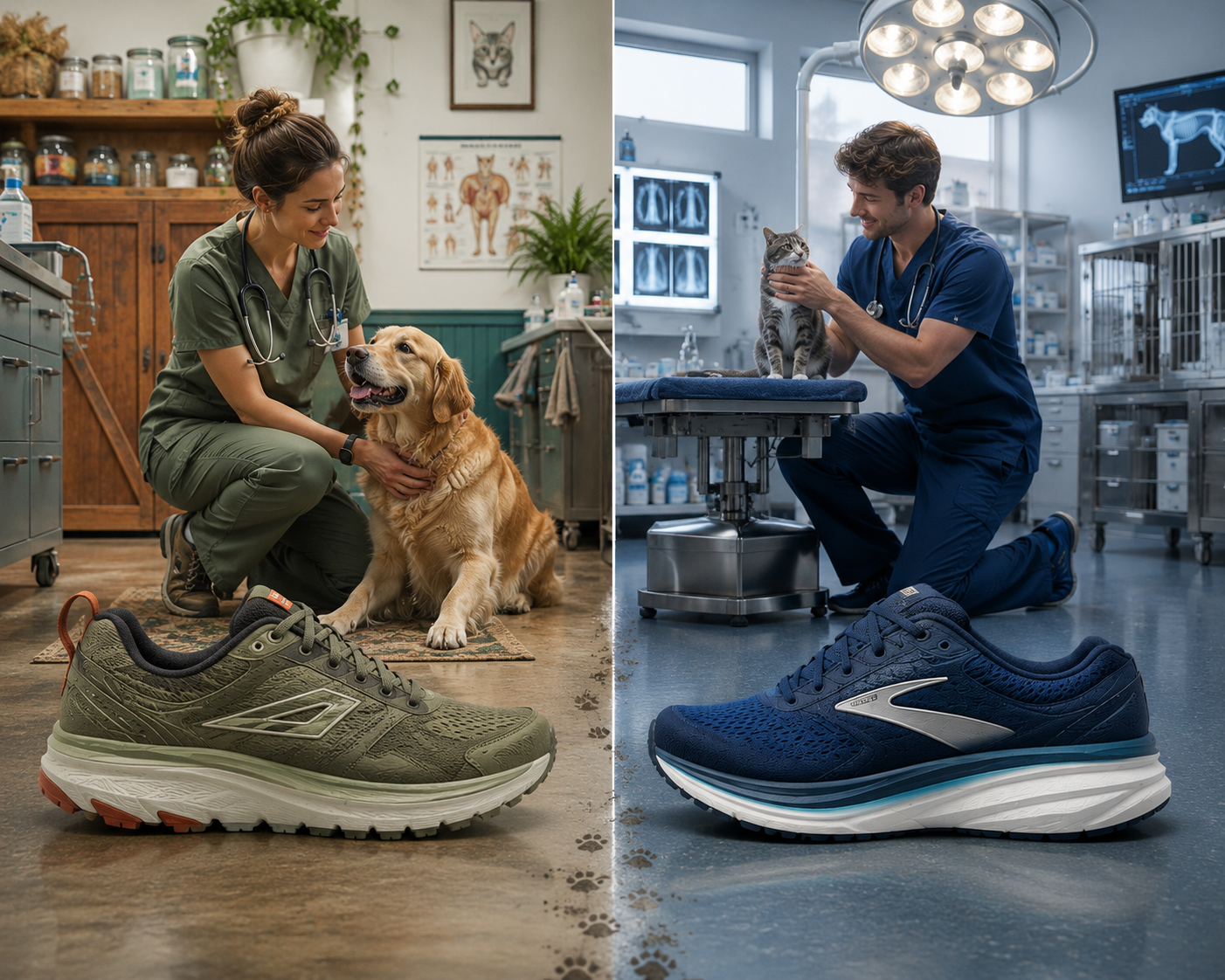
Altra vs Brooks for Veterinarians
Veterinarians spend some of the longest hours on their feet of any healthcare professional. A typical shift involves standing through surgeries, walking between exam rooms, restraining animals of all sizes, and working on hard clinic floors that put constant stress on the feet, knees, hips, and lower back. By the end of the day, even experienced professionals can feel the effects of poor footwear.
That’s why choosing between Altra and Brooks is about much more than picking a popular running shoe. Both brands are trusted for comfort, but they take completely different approaches to supporting your body during long workdays. Altra focuses on natural foot positioning with its signature FootShape™ toe box and zero-drop platform, while Brooks emphasizes plush cushioning, stability, and traditional heel-to-toe support.
So, which brand is better for veterinarians?
The answer depends on your foot shape, work environment, existing foot conditions, and personal comfort preferences. A veterinarian with wide feet and bunions may benefit more from Altra’s spacious design, while someone dealing with plantar fasciitis or overpronation may find Brooks’ supportive models a better fit.
In this guide, we’ll compare Altra and Brooks from the perspective of veterinary professionals—not runners. We’ll look at cushioning, stability, durability, traction, toe box width, cleanability, and the best models for long shifts in clinics and hospitals. By the end, you’ll know which brand is the smarter investment for your daily work.
Quick Verdict
If you don’t have time to read the full comparison, here’s the short answer.
| If your priority is… | Best Choice | Why |
|---|---|---|
| Wide feet | Altra | Spacious FootShape™ toe box reduces pressure on the forefoot. |
| Bunions or toe pain | Altra | More room for natural toe splay and less compression. |
| Plantar fasciitis | Brooks | Better heel cushioning and supportive options like Adrenaline GTS. |
| Flat feet | Brooks | Stability technologies help control overpronation. |
| Maximum cushioning | Brooks | Glycerin series offers plush, long-lasting comfort. |
| Natural foot movement | Altra | Zero-drop platform encourages a more natural gait. |
| First-time buyer | Brooks | Easier transition from traditional athletic shoes. |
| Experienced zero-drop wearer | Altra | Designed for runners and walkers who prefer a flat platform. |
| Waterproof work option | Brooks | More models available in Gore-Tex and water-resistant versions. |
| Overall recommendation for most veterinarians | Brooks | Better all-around support, cushioning, and easier adaptation for long clinic shifts. |
Bottom line: Brooks is the safer choice for most veterinarians because of its excellent cushioning and stability. However, if you have naturally wide feet, struggle with bunions, or already enjoy zero-drop footwear, Altra can be the more comfortable long-term option.
Why Veterinarians Need Specialized Shoes
Not all healthcare jobs place the same demands on your feet. Veterinary professionals often switch between standing still during procedures, walking long hospital corridors, crouching to examine animals, and reacting quickly in unpredictable situations. These constant changes in movement make supportive footwear essential.
A typical day in a veterinary clinic may include:
- Standing for 8 to 12 hours with few opportunities to sit.
- Walking several miles between treatment rooms, kennels, laboratories, and reception areas.
- Lifting or restraining large dogs and other animals, placing extra strain on the knees and lower back.
- Working on hard tile or concrete floors that provide little natural shock absorption.
- Navigating wet or slippery areas where spills, water, or cleaning solutions can reduce traction.
These repetitive demands can contribute to common problems such as:
- Heel pain and plantar fasciitis
- Lower back discomfort
- Knee pain caused by poor alignment
- Fatigue in the feet and calves
- Bunions and forefoot pain from narrow shoes
- Swollen feet after long shifts
The right pair of shoes won’t eliminate every ache, but it can significantly reduce fatigue and improve comfort throughout the day.
This is where Altra and Brooks stand out. Both brands are known for high-quality cushioning and durable construction, but they solve these problems in different ways. Understanding those differences is the key to choosing the pair that best supports your work in the clinic.
How We Evaluated Altra and Brooks for Veterinary Work
Most shoe comparisons are written for runners. This guide takes a different approach by evaluating each brand based on the real-world demands of veterinary practice.
Instead of focusing on race performance or running speed, we considered the features that matter most during long clinical shifts, including:
- Standing comfort: Does the cushioning remain comfortable after several hours on hard floors?
- Shock absorption: How well does the shoe reduce stress on the feet, knees, and lower back?
- Stability: Does it provide confidence when lifting or restraining larger animals?
- Toe box width: Is there enough room for natural toe movement and swelling during long shifts?
- Arch support: Can it accommodate different foot types, including flat feet and high arches?
- Traction: How well does the outsole grip smooth clinic flooring?
- Durability: Can the shoe handle daily wear without the cushioning breaking down quickly?
- Cleanability: Are there waterproof or easy-to-clean versions suitable for veterinary environments?
- Value for money: Does the comfort and durability justify the price?
Rather than naming one brand as the universal winner, our goal is to help you choose the shoe that best matches your feet, your work routine, and your comfort needs.
Altra vs. Brooks Comparison Table
Before diving into the details, here’s a side-by-side comparison of the two brands based on the features that matter most during long veterinary shifts.
| Feature | Altra | Brooks | Winner |
|---|---|---|---|
| Overall Comfort | Excellent | Excellent | Tie |
| Long-Hour Standing | Excellent | Excellent | Tie |
| Cushioning | Balanced and responsive | Plush and soft | Brooks |
| Stability | Good (select models) | Excellent | Brooks |
| Arch Support | Neutral to moderate | Moderate to high | Brooks |
| Toe Box Width | Very wide | Standard with wide options | Altra |
| Zero-Drop Platform | Yes (most models) | No | Depends on preference |
| Transition for New Users | Takes time | Easy | Brooks |
| Plantar Fasciitis | May require adjustment | Excellent options | Brooks |
| Flat Feet | Good in stability models | Excellent | Brooks |
| Bunions & Toe Pain | Outstanding | Good | Altra |
| Traction on Clinic Floors | Good | Good | Tie |
| Waterproof Options | Limited | More available | Brooks |
| Durability | Very good | Very good | Tie |
| Best for Wide Feet | Excellent | Good | Altra |
| Best for First-Time Buyers | Good | Excellent | Brooks |
Quick Take
If your priority is maximum support and all-day cushioning, Brooks has the advantage. Models like the Ghost, Glycerin, and Adrenaline GTS are designed to reduce fatigue and offer excellent shock absorption, making them a safe choice for most veterinarians.
On the other hand, if you have wide feet, bunions, or prefer a more natural foot position, Altra stands out with its roomy FootShape™ toe box and zero-drop design. These features encourage natural toe splay and can improve comfort during long shifts—provided you’re already comfortable with zero-drop footwear or transition gradually.
Comfort and Cushioning
When you’re working a 10- to 12-hour shift, comfort becomes more important than almost any other feature. Even a shoe that feels great for the first hour can become uncomfortable if the cushioning compresses or the fit creates pressure points later in the day.
Although both Altra and Brooks are known for comfort, they achieve it in very different ways.
Altra: Comfort Through Natural Foot Position
Altra designs its shoes around the natural shape of the human foot. Instead of tapering toward the toes like many athletic shoes, Altra uses a wider FootShape™ toe box that allows your toes to spread naturally.
For veterinarians, this can make a noticeable difference after several hours on your feet.
Benefits include:
- Reduced pressure on the forefoot
- More room for swollen feet during long shifts
- Less rubbing around bunions and hammertoes
- Better balance while standing
Most Altra models also feature lightweight foam that provides cushioning without making the shoe feel overly soft.
Rather than sinking into the shoe, you feel supported while maintaining good ground contact.
Many veterinary professionals who spend most of the day walking between treatment rooms appreciate this balanced feel because it reduces fatigue without feeling unstable.
Brooks: Comfort Through Plush Cushioning
Brooks takes a different approach.
Instead of emphasizing natural foot positioning, Brooks focuses on absorbing impact through generous cushioning.
Its premium midsoles—such as DNA Loft and DNA Tuned—are engineered to soften every step while maintaining support throughout the day.
For veterinarians who spend hours standing on tile or concrete floors, this extra cushioning can reduce stress on the:
- heels
- knees
- hips
- lower back
Unlike overly soft shoes that lose their shape after a few hours, Brooks models are designed to maintain consistent support throughout an entire workday.
This makes them especially popular among healthcare workers who rarely get a chance to sit.
Which Brand Reduces Fatigue Better?
If your shifts involve constant standing in surgery or treatment rooms, Brooks generally has the advantage.
Its softer cushioning absorbs repetitive impact more effectively, helping reduce soreness by the end of the day.
If your work involves continuous walking throughout the clinic, Altra’s more balanced platform may feel more natural and efficient, especially if you already prefer zero-drop footwear.
Comfort for Different Foot Types
Choose Altra if you have:
- Wide feet
- Bunions
- Morton’s neuroma
- Toe pain
- Swollen feet after long shifts
Choose Brooks if you have:
- Narrow or average-width feet
- Heel pain
- Plantar fasciitis
- Knee discomfort
- Lower back fatigue
Winner: Brooks (For Most Veterinarians)
Both brands deliver excellent comfort, but Brooks earns the edge because its cushioning is easier to adapt to and works well for a wider range of foot types.
Most veterinarians transitioning from traditional athletic shoes will find Brooks immediately comfortable without needing an adjustment period.
Altra remains an outstanding choice for professionals who prioritize natural foot movement and need extra space in the toe box.
Stability and Support
Veterinary work isn’t just about standing still. Throughout a typical shift, you may squat to examine a patient, kneel during procedures, carry equipment, or help restrain a large dog that suddenly changes direction.
These movements place significant demands on your ankles, knees, and hips. A stable shoe can help you feel more secure while reducing fatigue caused by constant balancing and weight shifting.
This is one area where the design philosophies of Altra and Brooks differ considerably.
Altra: Stability Through Natural Alignment
Rather than relying on firm posts or rigid support structures, Altra promotes stability by encouraging a more natural posture.
Most models feature:
- A zero-drop platform that keeps the heel and forefoot at the same height.
- A broad base that increases ground contact.
- A roomy toe box that allows your toes to spread for better balance.
For experienced zero-drop users, this combination can create a stable, grounded feeling during long hours on the clinic floor.
However, neutral Altra models don’t provide the same level of corrective support as traditional stability shoes.
If you have flat feet or significant overpronation, you’ll likely benefit from one of Altra’s stability-focused models, such as the Paradigm.
Brooks: Stability Through Supportive Technology
Brooks approaches stability more directly.
Many of its shoes incorporate GuideRails® technology, a system designed to limit excessive side-to-side movement without feeling overly restrictive.
Instead of forcing your foot into a specific position, the GuideRails system helps keep your knees and ankles aligned as fatigue sets in throughout the day.
This can be especially beneficial for veterinarians who:
- Stand for extended surgeries.
- Frequently lift or restrain heavy animals.
- Experience knee pain after long shifts.
- Have flat feet or overpronation.
Combined with Brooks’ supportive midsoles, these features provide a secure and predictable ride, even during demanding workdays.
Which Brand Offers Better Stability?
For most veterinary professionals, Brooks is the stronger choice.
Its combination of cushioning and stability technology makes it easier to maintain proper alignment during long hours on hard clinic floors.
Altra remains an excellent option for those who already enjoy zero-drop shoes and prefer a more natural style of movement, but it requires more adaptation and may not provide enough support for everyone.
Winner: Brooks — especially for veterinarians with flat feet, overpronation, or chronic knee discomfort.
Toe Box and Foot Shape
One of the biggest differences between Altra and Brooks is how they fit around the front of your foot.
For veterinarians, this matters more than many people realize.
After several hours of standing and walking, it’s normal for your feet to swell. If your shoes have a narrow toe box, your toes become compressed, leading to discomfort that often gets worse as the day goes on. Over time, this pressure can contribute to bunions, hammertoes, nerve irritation, and aching forefeet.
This is where Altra and Brooks offer two very different experiences.
Altra: Built Around the Natural Shape of Your Foot
Altra has built its reputation on its signature FootShape™ toe box, which is noticeably wider than most traditional running shoes.
Instead of squeezing your toes together, it allows them to spread naturally. This design can improve comfort during long shifts and helps distribute pressure more evenly across the forefoot.
For veterinarians who spend all day on hard clinic floors, that extra room can make a significant difference by the end of a shift.
Many professionals appreciate Altra because the wider fit can help:
- Reduce pressure on bunions
- Minimize friction between the toes
- Accommodate foot swelling during long workdays
- Improve balance by allowing natural toe splay
- Increase overall comfort during extended standing
If you’ve ever taken your shoes off after work and immediately felt relief in your toes, a wider toe box may be exactly what you need.
Brooks: Traditional Fit with Wide Options
Brooks follows a more traditional athletic shoe design.
Most standard models have a secure, medium-width fit that works well for many people. If you prefer a snug feel around the midfoot and forefoot, Brooks may feel more supportive right out of the box.
Fortunately, many popular Brooks models are also available in Wide (2E) and, in some cases, Extra Wide (4E) sizes.
These wider versions provide additional room without dramatically changing the overall feel of the shoe.
However, even Brooks’ wide models don’t offer quite the same natural forefoot shape as Altra’s FootShape design.
Which Brand Is Better for Common Foot Problems?
Here’s how the two brands compare for conditions commonly experienced by veterinary professionals.
| Foot Condition | Better Choice | Reason |
|---|---|---|
| Wide feet | Altra | Naturally roomy forefoot provides more space. |
| Bunions | Altra | Reduces pressure around the big toe joint. |
| Hammertoes | Altra | Less compression across the toes. |
| Morton’s Neuroma | Altra | Wider toe box may reduce irritation between the metatarsals. |
| Narrow feet | Brooks | More secure fit helps reduce foot movement inside the shoe. |
| Mild forefoot swelling | Altra | Extra space improves comfort during long shifts. |
Does a Wider Toe Box Affect Stability?
Some buyers assume that a wider toe box makes a shoe feel loose or unstable.
In reality, toe box width and heel security are two different things.
Altra shoes are designed to keep the heel securely in place while giving the toes more freedom to move. If the shoe fits correctly, you shouldn’t feel like your foot is sliding around.
That said, people with very narrow feet may still prefer the more traditional fit offered by Brooks.
Winner: Altra
When it comes to toe comfort, especially during long veterinary shifts, Altra has a clear advantage.
Its FootShape™ design is one of the main reasons healthcare workers, teachers, and other professionals who spend long hours on their feet become loyal Altra users.
If you regularly deal with toe pain, bunions, or swollen feet after work, Altra is likely the better choice.
Slip Resistance and Cleanability
Veterinary clinics are very different from running trails or city sidewalks.
During a typical shift, you may encounter wet treatment rooms, freshly mopped floors, spilled water bowls, disinfectants, urine, blood, or other fluids. While no running shoe is specifically designed for these environments, traction and cleanability are still important factors when choosing your work footwear.
Traction on Clinic Floors
Both Altra and Brooks use durable rubber outsoles that provide reliable grip on dry surfaces and perform well on most indoor flooring.
However, their primary purpose is to deliver traction during walking and running—not to meet occupational slip-resistance standards.
In everyday veterinary settings, both brands generally perform well on:
- Tile floors
- Vinyl flooring
- Polished concrete
- Hallways
- Waiting areas
Extra caution is still necessary on freshly cleaned or wet floors, regardless of which brand you choose.
If your role involves frequent exposure to slippery environments, look for shoes with certified slip-resistant outsoles rather than relying solely on running shoe traction.
Waterproof and Easy-to-Clean Options
Veterinary work can get messy.
Open mesh uppers provide excellent airflow, but they also absorb liquids quickly. If water, disinfectant, or other fluids soak into the fabric, the shoes can become uncomfortable and more difficult to clean.
This is one area where Brooks currently offers more options.
Several popular Brooks models are available in Gore-Tex (GTX) versions, which help keep moisture out while maintaining breathability. Brooks also offers leather walking shoes, such as the Addiction Walker, that are easier to wipe clean after spills.
Altra has introduced weather-resistant versions of some models, but its selection is more limited and varies by season and region.
Tips for Keeping Your Shoes Clean
Regardless of which brand you choose:
- Wipe spills off as soon as possible.
- Allow shoes to dry naturally after cleaning.
- Avoid placing them near direct heat, which can damage adhesives and foam.
- Consider rotating between two pairs if you work several long shifts each week.
- Replace worn insoles if they begin to retain odor or lose cushioning.
Winner: Brooks
Both brands provide adequate traction for everyday clinic use, but Brooks takes the lead thanks to its broader selection of waterproof and easy-to-clean models.
If your work frequently exposes you to moisture or you simply want footwear that’s easier to maintain, Brooks offers more practical choices for veterinary professionals.
Durability
A comfortable shoe is only a good investment if it continues to perform after months of daily wear.
Veterinarians often log thousands of steps during a single shift while standing for extended periods on hard flooring. That constant pressure gradually compresses the midsole, wears down the outsole, and stresses the upper materials.
Both Altra and Brooks are known for producing high-quality shoes, but their durability depends on the specific model and how they’re used.
Altra Durability
Modern Altra shoes have improved significantly in durability compared to earlier generations.
Many current models feature:
- More resilient midsole foams that retain cushioning longer.
- Durable rubber outsoles designed for high-wear areas.
- Reinforced uppers on premium models.
Because Altra shoes encourage a more natural gait, some users notice different wear patterns than with traditional shoes. Regularly checking the outsole for uneven wear can help you decide when it’s time for a replacement.
Brooks Durability
Brooks has built a strong reputation for consistent durability across its lineup.
Models such as the Ghost, Glycerin, and Adrenaline GTS are widely recognized for maintaining their cushioning and structural support through months of heavy daily use.
The outsoles typically provide excellent abrasion resistance, making them a dependable choice for professionals who spend most of the day walking on indoor surfaces.
How Often Should Veterinarians Replace Their Shoes?
Even the best shoes lose cushioning over time.
If you wear the same pair for every shift, replacing them approximately every 6 to 12 months—or sooner if the cushioning feels flat or the outsole shows significant wear—is a reasonable guideline for many veterinary professionals. The exact lifespan depends on your body weight, activity level, and weekly hours worked.
Winner: Tie
Both brands produce durable footwear capable of handling the demands of veterinary work.
- Choose Altra if you value a roomy fit and natural movement without sacrificing longevity.
- Choose Brooks if you want dependable cushioning that tends to maintain its feel over extended periods.
With proper care and timely replacement, either brand can serve you well through countless clinic shifts.
Best Altra Shoes for Veterinarians
If you’ve decided that Altra’s foot-shaped design and natural walking experience match your needs, the next step is choosing the right model. Not every Altra shoe is built for the same purpose. Some prioritize maximum cushioning for long hours of standing, while others focus on stability or everyday versatility.
Below are the Altra models that are most suitable for veterinary professionals.
1. Altra Torin 9 – Best Overall Altra Shoe for Veterinarians
Best for: General practice veterinarians, vet techs, and anyone who spends all day walking and standing.
The Altra Torin 9 is one of the brand’s most balanced shoes. It combines generous cushioning with a lightweight design, making it an excellent choice for busy clinics where you’re constantly moving between exam rooms, treatment areas, and reception.
Its roomy FootShape™ toe box allows your toes to spread naturally, helping reduce pressure that builds up during long shifts. At the same time, the cushioning feels soft enough for standing without becoming unstable.
Pros
- Excellent all-day comfort
- Spacious toe box for natural toe movement
- Lightweight and breathable
- Flexible enough for squatting and kneeling
- Comfortable for both standing and walking
Cons
- Standard mesh upper absorbs liquids
- Zero-drop platform requires an adjustment period for some users
Our Verdict: If you only plan to buy one Altra shoe for veterinary work, the Torin 9 is the safest choice for most professionals.
2. Altra Paradigm 8 – Best for Flat Feet and Extra Support
Best for: Veterinarians with mild overpronation, flat feet, or knee discomfort.
The Paradigm 8 combines Altra’s natural foot shape with additional stability features, making it one of the best options for professionals who want the benefits of a wide toe box without sacrificing support.
Unlike traditional stability shoes that rely on rigid posts, the Paradigm uses Altra’s GuideRail™ technology to gently guide the foot only when extra support is needed.
This creates a more natural feel while still helping reduce excessive inward rolling of the foot as fatigue sets in.
Pros
- Excellent stability without feeling overly rigid
- Wide toe box reduces forefoot pressure
- Comfortable for long standing sessions
- Good option for flat feet
Cons
- Slightly heavier than the Torin
- Higher price than some neutral models
Our Verdict: The Paradigm 8 is the best Altra choice for veterinarians who need additional support throughout long shifts.
3. Altra FWD VIA – Best for Transitioning to Altra
Best for: Veterinarians interested in Altra but nervous about switching to zero-drop shoes.
One concern many first-time Altra buyers have is adapting to zero-drop footwear.
The FWD VIA helps solve that problem.
Unlike most Altra shoes, it features a modest heel-to-toe drop while maintaining the brand’s signature wide toe box and generous cushioning. This makes it feel more familiar to people coming from brands like Brooks, ASICS, or New Balance.
If you’ve worn traditional running shoes for years, the FWD VIA offers a gentler transition while still introducing many of the benefits that make Altra popular.
Pros
- Easier transition from traditional footwear
- Excellent cushioning for long shifts
- Spacious forefoot
- Comfortable for walking throughout the clinic
Cons
- Doesn’t deliver the full zero-drop experience
- Slightly bulkier than the Torin
Our Verdict: If this is your first Altra shoe, the FWD VIA is one of the easiest models to adapt to.
4. Altra VIA Olympus 2 – Best for Maximum Cushioning
Best for: Professionals who spend most of their day standing in one place.
When maximum cushioning is the priority, the VIA Olympus 2 stands out.
It offers one of the thickest midsoles in Altra’s lineup, creating a soft, protective ride that helps absorb impact from hard clinic floors.
Despite its generous cushioning, the shoe maintains Altra’s signature wide forefoot, allowing your feet to spread naturally throughout the day.
Pros
- Exceptional shock absorption
- Comfortable for long periods of standing
- Spacious fit
- Excellent for heavier users
Cons
- Heavier than other Altra models
- Less agile for quick movements
Our Verdict: If your role involves hours of standing during surgeries or consultations, the VIA Olympus 2 provides outstanding underfoot protection.
Which Altra Model Should You Choose?
Here’s a quick comparison to help you decide.
| Model | Best For | Cushioning | Support | Overall Rating |
|---|---|---|---|---|
| Torin 9 | Everyday veterinary work | ⭐⭐⭐⭐⭐ | ⭐⭐⭐⭐☆ | ⭐⭐⭐⭐⭐ |
| Paradigm 8 | Flat feet & stability | ⭐⭐⭐⭐⭐ | ⭐⭐⭐⭐⭐ | ⭐⭐⭐⭐⭐ |
| FWD VIA | Transition from traditional shoes | ⭐⭐⭐⭐⭐ | ⭐⭐⭐⭐☆ | ⭐⭐⭐⭐☆ |
| VIA Olympus 2 | Maximum standing comfort | ⭐⭐⭐⭐⭐ | ⭐⭐⭐⭐☆ | ⭐⭐⭐⭐⭐ |
Our Favorite Altra Model
For most veterinarians, the Altra Torin 9 offers the best balance of comfort, cushioning, flexibility, and value. It’s versatile enough for long clinic shifts while remaining light enough for constant movement.
If you need more support due to flat feet or overpronation, the Paradigm 8 is the stronger choice.
Editor’s Tip: If you’ve never worn zero-drop shoes before, don’t wear them for a full 12-hour shift on day one. Start with one to two hours a day and gradually increase your wear time over two to three weeks. This gives your calves and Achilles tendon time to adapt and reduces the risk of soreness or injury.
Best Brooks Shoes for Veterinarians
While Altra excels in natural foot positioning, Brooks is often the easier recommendation for veterinary professionals because of its exceptional cushioning, reliable support, and familiar fit.
Whether you’re dealing with plantar fasciitis, standing through surgeries, or simply looking for a dependable work shoe, Brooks has several models that perform exceptionally well in clinical environments.
In the next section, we’ll compare the Ghost 17, Glycerin 23, Adrenaline GTS 25, Ghost Max 3, and Addiction Walker, explaining which veterinarians each model is best suited for and why.
Best Brooks Shoes for Veterinarians
Brooks has earned a strong reputation among healthcare professionals for one simple reason: its shoes prioritize long-lasting comfort. Instead of focusing on natural foot positioning like Altra, Brooks designs its footwear to absorb impact, support proper alignment, and reduce fatigue during long hours on hard surfaces.
For veterinarians, that combination can make a noticeable difference by the end of a demanding shift.
Here are the Brooks models that stand out for veterinary work.
1. Brooks Ghost 17 – Best Overall Brooks Shoe for Veterinarians
Best for: General practice veterinarians, veterinary technicians, and professionals who spend the day walking between exam rooms.
The Brooks Ghost 17 is one of the brand’s most popular neutral shoes, and for good reason. It delivers a balanced mix of cushioning, durability, and versatility without feeling overly soft or bulky.
Whether you’re checking patients, assisting in procedures, or moving constantly throughout the clinic, the Ghost 17 provides dependable comfort from the beginning of your shift until the end.
Pros
- Excellent balance of comfort and responsiveness
- Lightweight enough for all-day movement
- Durable outsole for daily wear
- Available in multiple widths
- Easy transition for first-time Brooks users
Cons
- Standard toe box is narrower than Altra’s
- Mesh upper isn’t ideal for frequent fluid exposure
Our Verdict: If you’re unsure which Brooks model to choose, the Ghost 17 is the safest all-around recommendation for most veterinary professionals.
2. Brooks Glycerin 23 – Best for Maximum Cushioning
Best for: Veterinarians who spend long hours standing in surgeries or treatment rooms.
If comfort is your top priority, the Brooks Glycerin 23 deserves serious consideration.
Its premium DNA Tuned cushioning is designed to stay soft and supportive throughout the day, helping reduce pressure on the heels, knees, and lower back.
Unlike shoes that feel great initially but flatten after several hours, the Glycerin maintains its cushioning well during extended periods of standing.
Pros
- Plush underfoot feel
- Outstanding shock absorption
- Comfortable for heavier users
- Excellent for hard clinic floors
- Premium materials and finish
Cons
- Slightly heavier than the Ghost
- Higher price point
Our Verdict: For veterinarians who spend more time standing than walking, the Glycerin 23 is one of the most comfortable shoes Brooks makes.
3. Brooks Adrenaline GTS 25 – Best for Stability
Best for: Flat feet, overpronation, knee discomfort, and long shifts.
The Adrenaline GTS 25 has long been one of Brooks’ flagship stability shoes.
Its GuideRails® support system helps control excessive foot movement without forcing your foot into an unnatural position. As fatigue sets in later in the day, this additional stability can help reduce stress on the ankles and knees.
Many healthcare professionals choose the Adrenaline because it delivers supportive cushioning without feeling stiff or overly corrective.
Pros
- Excellent support for overpronation
- Helps improve lower-body alignment
- Comfortable for extended standing
- Available in wide sizes
- Durable construction
Cons
- Less flexible than neutral models
- Stability features may be unnecessary for neutral runners
Our Verdict: If you have flat feet or frequently experience knee pain after work, the Adrenaline GTS 25 is one of the best Brooks options available.
4. Brooks Ghost Max 3 – Best for Walking All Day
Best for: Busy veterinary clinics where you’re constantly moving.
The Ghost Max 3 takes the comfort of the standard Ghost and adds extra cushioning along with a rocker-shaped sole that encourages smooth heel-to-toe transitions.
That rocker design helps reduce the effort required with each step, making it particularly comfortable for professionals who spend hours walking between departments.
Pros
- Smooth, effortless walking experience
- Excellent shock absorption
- Stable platform
- Comfortable for long distances
- Reduces foot fatigue
Cons
- Bulkier than the standard Ghost
- Slightly less agile during quick movements
Our Verdict: If your workday involves constant walking rather than prolonged standing, the Ghost Max 3 is an excellent choice.
5. Brooks Addiction Walker 2 – Best Easy-to-Clean Option
Best for: Veterinary professionals who prioritize durability and easy maintenance.
Unlike traditional running shoes, the Addiction Walker 2 features a leather upper that’s easier to wipe clean after accidental spills.
It also offers excellent support and slip-resistant performance compared with many standard athletic shoes, making it a practical choice for clinic environments.
While it isn’t as soft or breathable as the Ghost or Glycerin, it excels in durability and low-maintenance care.
Pros
- Leather upper is easy to clean
- Supportive and stable
- Durable construction
- Suitable for daily clinical use
Cons
- Less breathable than mesh shoes
- Heavier than running models
- More walking shoe than athletic shoe
Our Verdict: If you’re frequently exposed to fluids or want a shoe that’s easier to maintain, the Addiction Walker 2 is worth considering.
Which Brooks Model Should You Choose?
| Model | Best For | Cushioning | Stability | Overall Rating |
|---|---|---|---|---|
| Ghost 17 | Everyday veterinary work | ⭐⭐⭐⭐⭐ | ⭐⭐⭐⭐☆ | ⭐⭐⭐⭐⭐ |
| Glycerin 23 | Standing all day | ⭐⭐⭐⭐⭐ | ⭐⭐⭐⭐☆ | ⭐⭐⭐⭐⭐ |
| Adrenaline GTS 25 | Flat feet & overpronation | ⭐⭐⭐⭐☆ | ⭐⭐⭐⭐⭐ | ⭐⭐⭐⭐⭐ |
| Ghost Max 3 | Walking throughout the clinic | ⭐⭐⭐⭐⭐ | ⭐⭐⭐⭐☆ | ⭐⭐⭐⭐☆ |
| Addiction Walker 2 | Easy cleaning & durability | ⭐⭐⭐⭐☆ | ⭐⭐⭐⭐⭐ | ⭐⭐⭐⭐☆ |
Altra vs. Brooks Models at a Glance
If you’re still deciding, this quick comparison highlights which model fits different veterinary needs.
| Your Priority | Recommended Shoe |
|---|---|
| Best overall for most veterinarians | Brooks Ghost 17 |
| Maximum cushioning | Brooks Glycerin 23 |
| Flat feet or overpronation | Brooks Adrenaline GTS 25 |
| Wide feet | Altra Torin 9 |
| Bunions or toe pain | Altra Torin 9 |
| Maximum toe room | Altra VIA Olympus 2 |
| Natural foot movement | Altra Torin 9 |
| Transitioning from traditional shoes | Altra FWD VIA |
| Easy-to-clean upper | Brooks Addiction Walker 2 |
| Standing through long surgeries | Brooks Glycerin 23 |
Editor’s Choice
After comparing comfort, support, durability, and suitability for long veterinary shifts, Brooks Ghost 17 is our top recommendation for most veterinarians. It offers a dependable blend of cushioning, stability, and versatility that suits a wide variety of foot types and work environments.
That said, if you have wide feet, bunions, or simply dislike cramped toe boxes, the Altra Torin 9 remains one of the best alternatives available.
Best Choice by Foot Type
No single shoe works for every veterinarian. Your foot shape, arch height, and any existing foot conditions play a major role in determining which brand will feel more comfortable during a 10- or 12-hour shift.
Use the guide below to find the option that’s most likely to meet your needs.
For Wide Feet
Recommended Brand: Altra
If you’ve always felt that running shoes squeeze your toes, Altra is likely to feel more comfortable from the first wear.
Its FootShape™ toe box gives your forefoot plenty of room, allowing your toes to spread naturally instead of being compressed together. This extra space can reduce pressure during long hours of standing and accommodate the natural swelling that often occurs by the end of a shift.
Recommended models:
- Altra Torin 9
- Altra VIA Olympus 2
- Altra Paradigm 8
For Narrow or Average-Width Feet
Recommended Brand: Brooks
Brooks shoes generally provide a more traditional fit with secure heel lockdown and a snug midfoot.
If your feet are narrow, you may appreciate the extra stability this fit provides, especially when moving quickly around the clinic.
Recommended models:
- Brooks Ghost 17
- Brooks Glycerin 23
For Plantar Fasciitis
Recommended Brand: Brooks
People dealing with plantar fasciitis often benefit from shoes with generous heel cushioning and reliable arch support.
Brooks offers several models that help reduce impact on the heel while maintaining good stability throughout the gait cycle.
Many podiatrists frequently recommend models like the Ghost and Adrenaline for individuals managing heel pain, though footwear should always be matched to your specific needs.
Recommended models:
- Brooks Adrenaline GTS 25
- Brooks Ghost 17
- Brooks Glycerin 23
For Flat Feet
Recommended Brand: Brooks
Flat feet can cause excessive inward rolling of the ankle (overpronation), increasing stress on the knees and lower back during long shifts.
Brooks stability shoes are specifically designed to address this issue without feeling overly rigid.
Recommended models:
- Brooks Adrenaline GTS 25
- Brooks Addiction Walker 2
For High Arches
Recommended Brand: Brooks
High arches usually benefit from soft cushioning that helps distribute pressure more evenly across the foot.
The plush midsoles found in the Glycerin and Ghost series provide excellent impact absorption for professionals who spend long hours on hard floors.
Recommended models:
- Brooks Glycerin 23
- Brooks Ghost Max 3
For Bunions or Toe Pain
Recommended Brand: Altra
One of the most common complaints among healthcare workers is discomfort around the big toe joint after a long day.
Because Altra shoes allow the toes to spread naturally, they’re often a better option for people with bunions or chronic forefoot pain.
Recommended models:
- Altra Torin 9
- Altra VIA Olympus 2
For Knee or Lower Back Pain
Recommended Brand: Brooks
Although footwear alone won’t solve chronic joint pain, supportive cushioning can reduce the repetitive impact of standing and walking.
Brooks’ combination of shock absorption and stability makes it an excellent choice for many veterinarians who experience discomfort after long shifts.
Recommended models:
- Brooks Glycerin 23
- Brooks Adrenaline GTS 25
Best Choice by Veterinary Role
Not every veterinary professional has the same daily routine.
Some spend hours standing in surgery, while others are constantly moving between exam rooms or traveling to farms. Choosing a shoe that matches your work environment can improve comfort and reduce fatigue.
Small Animal Veterinarian
Best Choice: Brooks Ghost 17
Small animal veterinarians typically divide their day between consultations, treatment rooms, and short procedures.
The Ghost 17 provides a great balance of cushioning, flexibility, and durability for this varied workload.
Veterinary Technician (Vet Tech)
Best Choice: Brooks Ghost Max 3
Vet techs are often the busiest members of the clinic, moving constantly between patients, laboratories, kennels, and treatment areas.
The extra cushioning and smooth rocker design of the Ghost Max 3 help reduce fatigue during long days filled with walking.
Surgery Veterinarian
Best Choice: Brooks Glycerin 23
Surgical procedures often require standing in the same position for extended periods.
The Glycerin’s plush cushioning helps reduce pressure on the heels, knees, and lower back while maintaining consistent comfort throughout lengthy operations.
Emergency Veterinarian
Best Choice: Brooks Adrenaline GTS 25
Emergency clinics demand quick movements, rapid direction changes, and long shifts.
The Adrenaline GTS 25 combines supportive cushioning with excellent stability, helping maintain confidence during unpredictable situations.
Equine or Large Animal Veterinarian
Best Choice: Altra Paradigm 8
Working with large animals often requires frequent squatting, walking on uneven surfaces, and maintaining balance while handling powerful patients.
The Paradigm’s wide base and spacious toe box provide excellent stability and comfort throughout the day.
Shelter Veterinarian
Best Choice: Brooks Addiction Walker 2
Shelter environments often involve frequent cleaning and exposure to water or disinfectants.
The Addiction Walker’s leather upper is easier to wipe clean than traditional mesh running shoes, making it a practical option for these settings.
Mobile Veterinarian
Best Choice: Altra Torin 9
Mobile vets spend a significant amount of time walking on different surfaces, getting in and out of vehicles, and visiting clients.
The lightweight Torin 9 offers excellent comfort while adapting well to varied environments.
Quick Recommendations by Situation
If you’re still undecided, this table summarizes our recommendations.
| Situation | Recommended Shoe |
|---|---|
| First-time Brooks buyer | Brooks Ghost 17 |
| First-time Altra buyer | Altra FWD VIA |
| Standing in surgery all day | Brooks Glycerin 23 |
| Walking throughout the clinic | Brooks Ghost Max 3 |
| Wide feet | Altra Torin 9 |
| Bunions | Altra Torin 9 |
| Flat feet | Brooks Adrenaline GTS 25 |
| Heavy daily workload | Brooks Glycerin 23 |
| Need a wipe-clean shoe | Brooks Addiction Walker 2 |
| Prefer natural foot movement | Altra Torin 9 |
Expert Tip: If you’re between sizes or your feet tend to swell during long shifts, try on shoes later in the day when your feet are at their largest. This helps ensure a more comfortable fit during real working conditions.
Zero-Drop Transition Guide: Important Before Choosing Altra
One of the biggest mistakes first-time Altra buyers make is wearing zero-drop shoes for an entire work shift immediately.
If you’ve spent years wearing traditional shoes with an 8–12 mm heel-to-toe drop, your calves and Achilles tendons have adapted to that position. Switching directly to a zero-drop shoe can place additional strain on these muscles and may lead to soreness or discomfort during the first few weeks.
To make the transition smoother:
- Start slowly: Wear your Altras for 1–2 hours a day before using them for a full shift.
- Increase wear time gradually: Add an hour or two every few days as your legs adapt.
- Stretch your calves: Gentle calf and Achilles stretches can help reduce tightness.
- Listen to your body: Mild muscle soreness is common, but persistent pain is a sign to reduce wear time and transition more gradually.
If you’re interested in Altra but don’t want to jump straight into a zero-drop platform, the Altra FWD VIA offers a more familiar ride while still providing the brand’s signature roomy toe box.
A gradual transition can help you enjoy the benefits of Altra’s natural foot design while minimizing the risk of unnecessary discomfort.
Frequently Asked Questions
Are Altra shoes good for veterinarians?
Yes, Altra shoes can be an excellent choice for veterinarians, especially those with wide feet, bunions, or toe pain. Their signature FootShape™ toe box allows the toes to spread naturally, reducing pressure during long shifts.
However, most Altra models feature a zero-drop platform, which may require a gradual transition if you’re used to traditional athletic shoes.
Are Brooks shoes good for standing all day?
Absolutely. Brooks is one of the most popular footwear brands among healthcare professionals because of its excellent cushioning and supportive designs.
Models like the Ghost 17, Glycerin 23, and Adrenaline GTS 25 provide long-lasting comfort for professionals who spend 8 to 12 hours on hard floors.
Which brand is better for plantar fasciitis?
For most people, Brooks is the better choice.
Its combination of heel cushioning, supportive midsoles, and stability options helps reduce stress on the plantar fascia during long periods of standing and walking.
If you already wear zero-drop shoes comfortably, some Altra models may work well, but they aren’t typically the first recommendation for someone new to managing plantar fasciitis.
Which brand is better for wide feet?
Altra is the clear winner.
Its FootShape™ toe box is specifically designed to provide more room in the forefoot than traditional athletic shoes.
If you’ve struggled with cramped toes or discomfort after long shifts, Altra is worth considering.
Which brand offers better arch support?
Overall, Brooks provides more options for people who need additional arch support.
Models like the Adrenaline GTS 25 include stability features that help control excessive inward foot movement without feeling overly rigid.
Which brand lasts longer?
Both brands produce durable, high-quality shoes.
With regular use, most veterinarians can expect either brand to perform well for approximately 300–500 miles of walking or running, though lifespan varies depending on body weight, work hours, gait, and floor surfaces. If you wear the same pair for daily clinic shifts, replacing them every 6–12 months is a reasonable guideline once cushioning or traction begins to decline.
Are waterproof versions available?
Yes.
Brooks offers a larger selection of Gore-Tex (GTX) models, making it easier to find shoes that resist moisture during wet working conditions.
Altra also offers weather-resistant options, but availability is generally more limited.
Can veterinarians wear running shoes instead of medical clogs?
Yes. Many veterinarians and veterinary technicians prefer high-quality running shoes because they often provide better cushioning, flexibility, and shock absorption than traditional clogs.
The key is choosing a model that offers enough support for your feet and adequate traction for your workplace. If your employer requires slip-resistant footwear or specific safety features, always follow those workplace guidelines.
Should I choose a stability shoe or a neutral shoe?
That depends on your foot mechanics.
A neutral shoe is usually suitable if you have a neutral gait and don’t experience recurring foot or knee pain.
A stability shoe may be a better option if you have:
- Flat feet
- Overpronation
- Knee discomfort
- Arch pain
- A history of plantar fasciitis
If you’re unsure, a gait assessment at a specialty running store or advice from a podiatrist can help you choose the right category.
Final Verdict: Altra vs. Brooks for Veterinarians
After comparing comfort, cushioning, stability, durability, toe box design, and suitability for long veterinary shifts, it’s clear that both Altra and Brooks are excellent brands—but they serve different needs.
For most veterinarians, Brooks is the better all-around choice.
Its plush cushioning, supportive midsoles, and familiar fit make it easy to wear straight out of the box. Models like the Ghost 17, Glycerin 23, and Adrenaline GTS 25 are particularly well-suited to long days spent standing, walking, and moving quickly around a clinic.
That said, Altra shouldn’t be overlooked.
If you have wide feet, bunions, or prefer a more natural foot position, Altra’s roomy toe box can provide exceptional comfort. Just remember that transitioning to zero-drop footwear should be done gradually to give your calves and Achilles tendon time to adapt.
Our Top Recommendations
| If You Need… | Our Recommendation |
|---|---|
| Best Overall | Brooks Ghost 17 |
| Best for Standing All Day | Brooks Glycerin 23 |
| Best for Flat Feet | Brooks Adrenaline GTS 25 |
| Best for Wide Feet | Altra Torin 9 |
| Best for Bunions | Altra Torin 9 |
| Best Stability (Altra) | Altra Paradigm 8 |
| Best for Zero-Drop Beginners | Altra FWD VIA |
| Best Easy-to-Clean Option | Brooks Addiction Walker 2 |
Final Recommendation
If you’re buying your first pair of work shoes for veterinary practice, Brooks is the safest and most versatile choice. Its combination of cushioning, support, and broad range of models works well for the majority of veterinary professionals.
However, if you’ve never been completely comfortable in traditional running shoes and often experience toe pain or cramped feet, Altra may be the upgrade you’ve been looking for.
Ultimately, the best shoe is the one that matches your foot shape, work environment, and daily routine. A pair that feels comfortable during a quick try-on should also continue supporting you through hours of surgeries, consultations, and busy clinic floors.
Footwear is only one part of staying comfortable during long veterinary shifts. Replacing worn-out shoes before the cushioning breaks down, rotating between two pairs if you work multiple consecutive days, and wearing quality moisture-wicking socks can all help reduce fatigue and extend the life of your shoes.
If you’re still deciding, start with the model that best matches your foot type rather than simply choosing the most popular shoe. In the long run, a better fit is almost always more important than brand loyalty.