
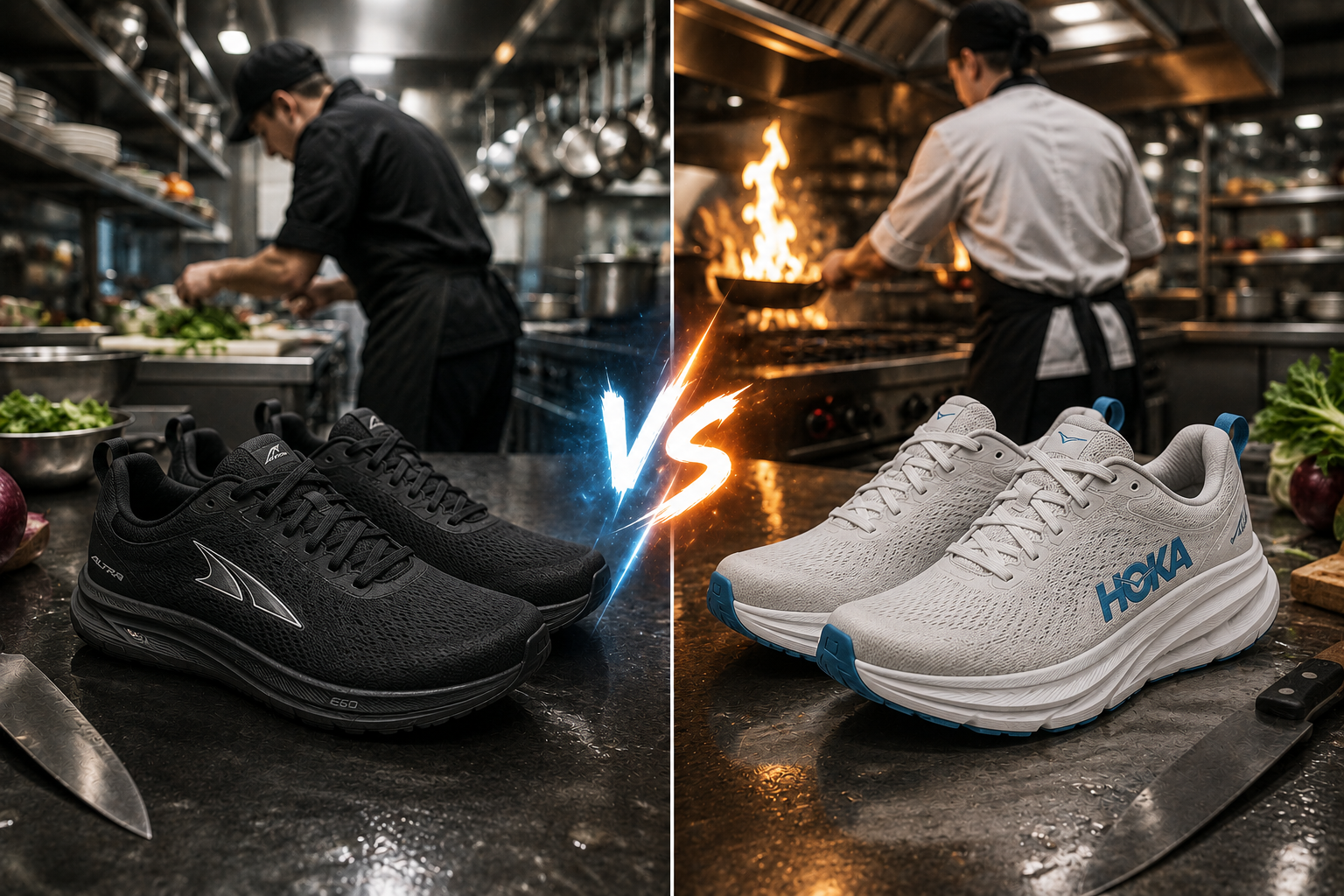
Altra vs Hoka for Chefs
If you’ve ever finished a 10- to 14-hour shift with aching feet, sore knees, or a stiff lower back, you’re not alone. Whether you’re a chef, line cook, prep cook, baker, dishwasher, or restaurant manager, your shoes play a bigger role in your comfort than almost any other piece of work equipment.
Commercial kitchens are unforgiving environments. You’re constantly walking across hard tile or concrete floors, pivoting between stations, lifting heavy pots, and dealing with water, oil, and food spills. A poor pair of shoes doesn’t just make your shift uncomfortable—it can contribute to fatigue, joint pain, and even increase the risk of slips and falls.
That’s why more restaurant professionals are moving away from traditional clogs and exploring high-performance footwear from brands like Hoka and Altra. Originally designed for runners, both brands now offer models that are suitable for demanding work environments, especially versions with leather uppers and slip-resistant outsoles.
But which one is the better choice for kitchen work?
The answer isn’t as simple as picking the brand with the softest cushioning. Your foot shape, walking style, work environment, and even your experience with different shoe designs all play an important role.
In this detailed comparison, we’ll examine how Altra and Hoka perform where it matters most for restaurant professionals:
- Comfort during long shifts
- Cushioning and shock absorption
- Slip resistance
- Support for foot pain
- Toe box comfort
- Durability
- Ease of cleaning
- Value for money
By the end of this guide, you’ll know exactly which brand is the better investment for your feet.
Quick Verdict
If you’re short on time, here’s the summary.
Choose Hoka if you:
- Stand mostly in one place for long periods
- Want maximum cushioning
- Experience heel pain, knee pain, or lower back discomfort
- Prefer a soft, plush feel underfoot
- Need extra shock absorption on hard floors
Choose Altra if you:
- Have wide feet
- Struggle with bunions or cramped toes
- Prefer a natural foot position
- Like a roomy toe box
- Don’t mind adapting to a zero-drop platform
Neither brand is universally better. The right choice depends on your feet and the type of work you do every day.
Altra vs Hoka at a Glance
| Feature | Altra | Hoka |
|---|---|---|
| Cushioning | ⭐⭐⭐⭐☆ | ⭐⭐⭐⭐⭐ |
| Shock Absorption | Very Good | Excellent |
| Toe Box | Excellent | Good |
| Wide Feet | Excellent | Very Good (Wide models available) |
| Heel Pain | Good | Excellent |
| Knee Comfort | Very Good | Excellent |
| Long Standing Shifts | Very Good | Excellent |
| Natural Foot Position | Excellent | Good |
| Slip-Resistant Work Models | Available on selected models | Available on selected models |
| Best Overall for Most Restaurant Workers | Runner-up | Winner |
Why Restaurant Workers Need Specialized Shoes
Many people think any comfortable running shoe will work in a restaurant. Unfortunately, that’s rarely true.
Working in a commercial kitchen places unique demands on your feet that most athletic shoes weren’t designed to handle.
During a typical shift, you may:
- Walk more than 20,000 steps
- Stand continuously for 8 to 14 hours
- Pivot hundreds of times
- Carry heavy trays or cookware
- Walk across wet, greasy, or uneven floors
- Work in high temperatures
These conditions create constant pressure on your:
- heels
- arches
- knees
- hips
- lower back
Over time, this repetitive stress can lead to common problems such as:
- Plantar fasciitis
- Achilles tendon irritation
- Heel pain
- Swollen feet
- Bunions
- Knee discomfort
- Lower back pain
A supportive, well-designed shoe won’t eliminate these issues entirely, but it can significantly reduce daily fatigue and improve long-term comfort.
What Makes a Great Kitchen Shoe?
Before comparing Altra and Hoka, it’s important to understand what restaurant professionals should look for in a work shoe.
Slip Resistance
Restaurant floors are constantly exposed to water, oil, grease, sauces, and cleaning chemicals.
A shoe with a quality slip-resistant outsole helps improve traction and reduces the risk of accidents. If your workplace has specific safety requirements, check whether your chosen model meets the standards expected by your employer.
Comfortable Cushioning
Hard tile and concrete floors don’t absorb impact.
Every step sends force back through your feet and joints.
Good cushioning helps reduce this repeated impact, especially during double shifts.
Easy-to-Clean Upper
Mesh running shoes breathe well but are difficult to clean and offer little protection from hot liquids.
Leather uppers are generally easier to wipe clean and provide better protection against splashes, making them a popular choice in professional kitchens.
Stable Support
A shoe should keep your foot secure while allowing natural movement.
Too much instability can increase fatigue, while an overly rigid design may feel uncomfortable during long hours of walking.
Room for Swollen Feet
Feet naturally expand throughout the day.
A cramped toe box may feel comfortable at the beginning of a shift but become painful by hour ten.
This is one area where Altra has built a strong reputation.
Meet the Contenders
Hoka Bondi SR
When restaurant workers talk about Hoka, one model comes up more than any other: the Bondi SR.
Unlike the standard Bondi running shoe, the Bondi SR is designed specifically for professionals who spend long hours on their feet.
Key features include:
- Water-resistant leather upper
- Thick EVA foam cushioning
- Early-stage Meta-Rocker geometry
- Slip-resistant rubber outsole
- Easy-to-clean exterior
The Bondi SR focuses on reducing impact rather than creating a natural running feel.
As you walk, the rocker-shaped sole helps guide your stride forward, which many users find reduces fatigue during long shifts.
Why Restaurant Workers Like It
The biggest advantage is comfort.
Many chefs describe the Bondi SR as feeling noticeably softer than traditional kitchen shoes, especially after several hours on hard floors.
The generous cushioning also helps reduce pressure on the heels, making it a popular option for workers dealing with plantar fasciitis or heel soreness.
Another benefit is the leather upper. It resists light splashes better than mesh and is much easier to clean at the end of the day.
Potential Drawbacks
No shoe is perfect.
The Bondi SR is heavier than many athletic shoes, and some users with narrow or sensitive midfeet may find the fit snug. It’s also one of the more expensive options in this category.
However, many restaurant professionals consider the extra comfort worth the higher price, particularly if they’re spending 40 to 60 hours a week on their feet.
Altra Torin Leather
If Hoka is known for its cloud-like cushioning, Altra has built its reputation around a completely different philosophy: allowing your feet to move as naturally as possible.
Rather than relying on an elevated heel and a narrow toe box, Altra designs its shoes with a FootShape™ toe box that gives your toes more room to spread naturally. Combined with a zero-drop platform—where the heel and forefoot sit at the same height—this creates a walking experience that feels noticeably different from most traditional athletic shoes.
For restaurant workers, the Altra Torin Leather is one of the most relevant models because it combines a leather upper that’s easier to clean with generous cushioning suitable for long hours on hard floors.
Key Features
- Full-grain leather upper
- FootShape™ toe box
- Zero-drop platform
- Responsive Altra EGO™ MAX midsole
- Flexible construction
- Suitable for long periods of standing and walking
Unlike many work shoes that prioritize rigidity, the Torin Leather allows your feet to move more freely while still providing substantial cushioning.
Why Restaurant Workers Like It
One of the biggest complaints among chefs is that their feet swell during long shifts. A shoe that feels comfortable at the beginning of the day can become painfully tight by the evening.
That’s where Altra stands out.
The spacious toe box gives your toes room to spread naturally, helping reduce pressure and discomfort during long shifts. Workers with wide feet, bunions, or Morton’s neuroma often appreciate this extra space.
The balanced platform also encourages a more natural posture for many people, which some users find comfortable during long periods of standing.
Potential Drawbacks
The biggest adjustment is the zero-drop design.
If you’ve spent years wearing shoes with an elevated heel, switching directly to a flat platform can put additional demand on your calves and Achilles tendon.
For this reason, many footwear specialists recommend gradually increasing your time in zero-drop shoes instead of wearing them for a full 12-hour shift on the first day.
Head-to-Head Comparison
Now let’s compare both brands in the areas that matter most to restaurant professionals.
Cushioning
Hoka
Hoka is famous for maximal cushioning.
The thick EVA foam absorbs impact exceptionally well, making every step feel softer.
For workers who spend most of their shift standing in one station, this extra cushioning can noticeably reduce fatigue.
Altra
Altra provides generous cushioning too, but the experience is different.
Instead of feeling plush, the cushioning feels more balanced and responsive.
Some people prefer this because it provides more ground awareness without feeling overly firm.
🏆 Winner: Hoka
Standing Comfort During Long Shifts
Restaurant workers spend far more time standing than runners.
When you’re on hard tile floors for 10–14 hours, impact reduction becomes incredibly important.
Many chefs who switch to Hoka report less heel and knee discomfort after long shifts.
Altra remains comfortable, especially for those who prefer a natural foot position, but Hoka generally offers better shock absorption.
🏆 Winner: Hoka
Toe Box Comfort
This category isn’t particularly close.
Altra’s FootShape™ toe box is one of its biggest selling points.
Instead of squeezing the toes together, it allows them to spread naturally.
For workers whose feet swell throughout the day, this can make a significant difference.
Hoka’s standard fit is more traditional, although several models are also available in wide widths.
🏆 Winner: Altra
Arch Support
Hoka typically provides a more structured feel under the arch.
Many users who experience heel pain or plantar fasciitis appreciate this additional support.
Altra’s platform is flatter and relies more on your natural foot mechanics.
Neither approach is inherently better—it depends on your feet.
🏆 Winner: Hoka (for most people)
Wide Feet
Restaurant workers with naturally wide feet often struggle to find shoes that don’t feel restrictive after several hours.
Altra was designed with this problem in mind.
The wider forefoot allows more natural movement and reduces pressure on the toes.
Although Hoka offers wide versions of many shoes, Altra generally provides more room in the front of the shoe.
🏆 Winner: Altra
Heel Pain
Workers suffering from heel pain often prioritize cushioning above everything else.
The thick midsole found in many Hoka shoes does an excellent job of softening repeated impact.
This is one reason the brand has become so popular among healthcare workers and hospitality professionals.
🏆 Winner: Hoka
Lower Back Comfort
While footwear alone won’t solve chronic back pain, reducing impact can help lessen fatigue over long shifts.
Hoka’s soft cushioning helps absorb force before it travels through the knees and hips.
For many users, this translates into less lower-back soreness by the end of the day.
🏆 Winner: Hoka
Breathability
Leather work shoes naturally sacrifice some airflow compared with mesh running shoes.
However, there are still differences.
The Bondi SR’s thicker leather construction offers excellent protection and durability but can feel warmer during busy services.
The Torin Leather generally feels a bit more flexible, although neither shoe matches the ventilation of a mesh running shoe.
If your kitchen becomes extremely hot, moisture-wicking socks can improve comfort regardless of the brand you choose.
🏆 Winner: Slight edge to Altra
Ease of Cleaning
Commercial kitchens demand shoes that can be cleaned quickly.
Both models use leather uppers that are much easier to wipe down than mesh.
A damp cloth and mild cleaner are usually enough for everyday maintenance.
🏆 Winner: Tie
Durability
Restaurant work is hard on shoes.
Constant walking, frequent bending, exposure to grease, and daily cleaning all contribute to wear.
With proper care, both Hoka Bondi SR and Altra Torin Leather can provide many months of reliable use.
The exact lifespan depends on your workload, body weight, walking style, and maintenance routine.
🏆 Winner: Tie
Price
Neither option is inexpensive.
Both sit in the premium footwear category, but many restaurant professionals see them as an investment in long-term comfort.
Considering how many hours you’ll spend wearing them each week, paying more for the right pair can be worthwhile.
🏆 Winner: Tie
Which Shoe Is Best for Your Foot Type?
Choose Hoka if you have:
- Heel pain
- Knee discomfort
- Lower back fatigue
- Plantar fasciitis (if you benefit from cushioned footwear)
- Sensitive joints
- A preference for soft cushioning
Choose Altra if you have:
- Wide feet
- Bunions
- Toe pain
- Morton’s neuroma
- Forefoot discomfort
- A preference for natural foot positioning
Which Shoe Is Best for Your Job?
Line Cook
Both are excellent choices.
If you’re constantly moving around the kitchen, Altra’s natural feel may appeal to you. If you spend more time standing in one station, Hoka’s cushioning may provide better comfort.
Executive Chef
Long hours of standing during service often make Hoka a strong choice thanks to its excellent shock absorption.
Prep Cook
Prep cooks who walk frequently throughout the day may appreciate Altra’s roomy toe box and balanced ride.
Baker or Pastry Chef
Many bakers spend hours standing in one position.
Hoka’s thick cushioning can help reduce fatigue on hard bakery floors.
Dishwasher
Because dishwashing areas are frequently wet, choosing a model with a reliable slip-resistant outsole is especially important. Leather uppers also make cleanup easier after the shift.
Important: Transitioning to Zero-Drop Shoes
If you’re thinking about switching to Altra, don’t make the mistake of wearing them for a full shift immediately.
Your calves, Achilles tendon, and feet may need time to adapt to the flatter platform.
A gradual transition often works best:
- Wear them for one to two hours at home.
- Increase wear time over several days.
- Alternate with your current work shoes.
- Move to full shifts only when your legs feel comfortable.
Taking this approach can make the transition much smoother and reduce unnecessary soreness.
What Restaurant Workers Say: Real-World Consensus
One of the best ways to judge a work shoe is to listen to the people who wear it every day. Across restaurant communities, professional reviews, and discussions among chefs and hospitality workers, a few clear patterns emerge.
Hoka Fans Often Mention
- Noticeably less heel pain after long shifts.
- Excellent cushioning on tile and concrete floors.
- Reduced knee and lower back fatigue.
- Comfortable straight out of the box for many users.
- Easy-to-clean leather upper on work-specific models.
Some users mention that Hoka shoes can feel bulky compared to traditional work shoes, and the premium price isn’t for every budget.
Altra Fans Often Mention
- Plenty of room for swollen feet during double shifts.
- Comfortable toe box for people with bunions or naturally wide feet.
- Stable, balanced feel while walking.
- Less pressure on the front of the foot.
The most common criticism isn’t about comfort—it’s the adjustment period. People switching from traditional shoes often need several days or even a few weeks to get used to Altra’s zero-drop platform.
Overall, restaurant workers tend to agree on one thing: both brands are a significant upgrade over cheap work shoes, especially for anyone spending eight or more hours on hard floors.
Can You Use Custom Orthotics?
Many chefs rely on custom orthotics or aftermarket insoles to manage foot pain.
Fortunately, both brands feature removable insoles on many models, making it possible to use third-party inserts.
Hoka
Hoka shoes already provide substantial cushioning and support. Some people find that adding thick orthotics reduces internal space, especially if the shoe has a snug fit.
If you wear custom orthotics, it’s usually a good idea to try the shoes with your inserts before committing to a size.
Altra
Thanks to its roomy toe box and relatively flat interior platform, many users find Altra accommodates aftermarket insoles comfortably. If you have particularly wide feet, choosing an insole designed for wider footwear may improve the overall fit.
Caring for Your Kitchen Shoes
Premium work shoes are an investment, and proper care can help them last longer.
Clean Them Regularly
Wipe away grease, food residue, and moisture after each shift using a soft cloth.
Let Them Dry Naturally
If your shoes become wet, allow them to air dry. Avoid placing them near direct heat sources, as excessive heat can damage leather and foam.
Rotate Between Two Pairs
If you work full-time, rotating between two pairs allows the midsoles to recover and helps reduce moisture buildup.
Replace Worn Outsoles
Even the best slip-resistant outsole loses traction over time. If the tread becomes noticeably worn, it’s time to consider a replacement pair.
Frequently Asked Questions
Are Hoka shoes good for chefs?
Yes. Models like the Hoka Bondi SR are popular among chefs and restaurant workers because they combine excellent cushioning, a leather upper that’s easier to clean, and a slip-resistant outsole designed for demanding work environments.
Are Altra shoes good for standing all day?
Many people find Altra shoes comfortable for long shifts, particularly if they have wide feet or prefer a more natural foot position. However, if you’re new to zero-drop footwear, allow time to adjust before wearing them for an entire workday.
Which brand is better for plantar fasciitis?
There isn’t a single answer for everyone.
Some people experience more relief with Hoka’s soft cushioning and supportive design, while others prefer Altra’s natural alignment. If you have persistent plantar fasciitis, it’s worth consulting a healthcare professional for advice tailored to your needs.
Which shoe is better for wide feet?
Altra generally has the advantage thanks to its FootShape™ toe box, which allows the toes to spread naturally.
Which shoe is better for narrow feet?
People with narrow feet may prefer Hoka’s more traditional fit, although trying the shoes on is always recommended when possible.
Can chefs wear running shoes?
Standard mesh running shoes aren’t always ideal for commercial kitchens because they’re harder to clean and offer limited protection from spills. Work-specific models with leather uppers and slip-resistant outsoles are usually a better option.
Are leather shoes hotter than mesh shoes?
Yes. Leather provides better protection and is easier to clean, but it usually traps more heat than mesh. Wearing moisture-wicking socks can improve comfort during long shifts.
Which brand lasts longer?
With proper care, both Hoka and Altra can provide excellent durability. Lifespan depends on factors such as working hours, walking style, body weight, and how well the shoes are maintained.
Final Verdict
Choosing between Altra and Hoka isn’t about finding a universal winner—it’s about finding the shoe that matches your feet and your work routine.
Choose Hoka if you:
- Spend long hours standing in one place.
- Want maximum cushioning.
- Experience heel, knee, or lower back discomfort.
- Prefer a soft, plush underfoot feel.
- Want a work shoe that requires little adjustment.
Choose Altra if you:
- Have wide feet or bunions.
- Dislike cramped toe boxes.
- Prefer a natural foot position.
- Want your toes to spread comfortably during long shifts.
- Are willing to transition gradually to a zero-drop platform.
Our Overall Recommendation
For most restaurant workers, Hoka takes the top spot thanks to its outstanding cushioning, excellent comfort during long shifts, and work-focused models like the Bondi SR.
However, Altra is an excellent alternative for workers who prioritize toe space, natural movement, and all-day comfort for wider feet.
The good news is that both brands represent a significant improvement over many traditional kitchen shoes. Investing in quality footwear can reduce daily fatigue, improve comfort, and help you finish every shift feeling less worn out.
Conclusion
Your shoes are one of the most important investments you’ll make as a restaurant professional. Long hours on unforgiving floors can take a serious toll on your body, but the right pair of shoes can make every shift more comfortable.
If cushioning and impact protection are your highest priorities, Hoka is difficult to beat. If your biggest concern is toe comfort, foot shape, and natural movement, Altra deserves a close look.
Whichever brand you choose, remember that the best work shoe is the one that fits your feet properly, supports your daily workload, and helps you stay comfortable from the first ticket of the day to the final cleanup.
SEO Meta Title
Altra vs Hoka for Chefs: Which Shoes Are Best for Long Kitchen Shifts? (2026)
Length: ~60 characters
SEO Meta Description
Trying to choose between Altra and Hoka for kitchen work? Compare comfort, cushioning, slip resistance, durability, toe box, and support to find the best shoes for chefs and restaurant workers.
Length: ~155 characters
Suggested Internal Links
To strengthen your site’s topical authority, link this article to:
- Best Shoes for Chefs
- Best Slip-Resistant Shoes for Restaurant Workers
- Hoka Bondi SR Review
- Altra Torin Leather Review
- Best Shoes for Standing All Day
- Best Shoes for Plantar Fasciitis
- Hoka vs Brooks
- Hoka vs On
- Altra vs Brooks
- Best Shoes for Wide Feet
Suggested Image Alt Text
- Hoka Bondi SR and Altra Torin Leather side-by-side comparison
- Chef wearing Hoka Bondi SR in a commercial kitchen
- Altra Torin Leather showing its wide FootShape toe box
- Slip-resistant outsole of a kitchen work shoe
- Restaurant worker standing on tile flooring wearing Hoka shoes
- Comparison of Hoka and Altra midsoles
- Chef preparing food while wearing leather work shoes
- Wide toe box comparison between Altra and Hoka