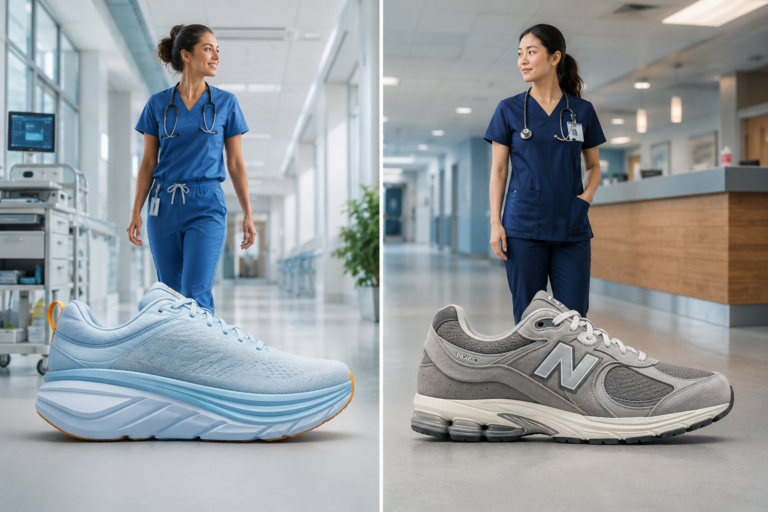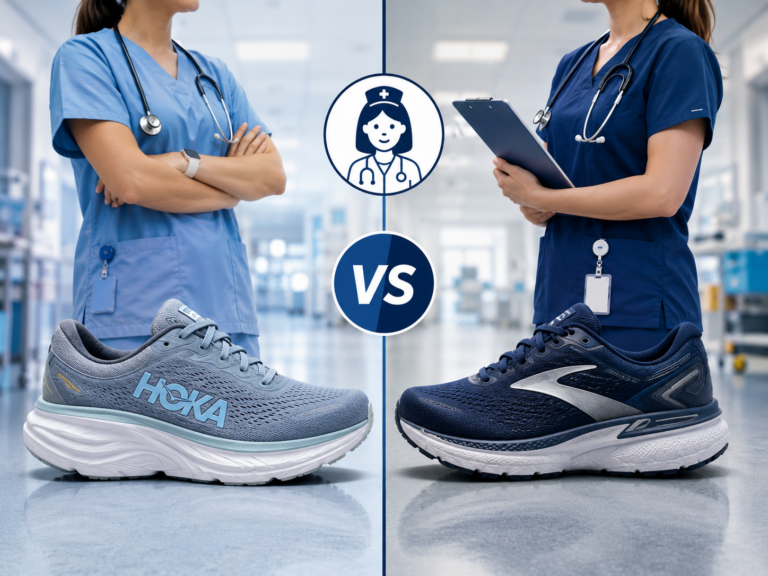

Hoka vs On Cloud for Nurses
Finding the right work shoes isn’t just about comfort when you’re a nurse—it’s about protecting your feet, knees, back, and energy through long, demanding shifts. Whether you’re working in the emergency department, ICU, operating room, or a busy medical-surgical unit, your shoes can make the difference between finishing your shift feeling tired or ending the day with aching feet and sore joints.
Two brands consistently dominate conversations among healthcare professionals: Hoka and On Cloud. Both have built strong reputations for comfort, support, and premium performance, but they take very different approaches to helping your feet survive 12-hour shifts.
Hoka focuses on maximum cushioning and shock absorption, making it a favorite among nurses who spend hours standing in one place or struggle with heel pain and plantar fasciitis. On Cloud, on the other hand, emphasizes lightweight comfort, responsive cushioning, and a more athletic feel that’s especially appealing to nurses who walk thousands of steps throughout their shifts.
So, which brand is actually better for nurses?
The answer depends on how you work, where you work, and what kind of foot support you need. A labor and delivery nurse has different footwear requirements than an emergency room nurse who spends the entire day moving between patient rooms. Likewise, someone dealing with chronic heel pain will prioritize different features than someone simply looking for a lightweight shoe that feels comfortable from clock-in to clock-out.
In this detailed comparison, we’ll look beyond marketing claims and compare Hoka and On Cloud in the areas that matter most to healthcare professionals, including:
- Cushioning and comfort during 12-hour shifts
- Support for plantar fasciitis, flat feet, and knee pain
- Stability on hard hospital floors
- Durability under daily hospital use
- Breathability and weight
- Slip resistance and cleaning
- Value for money
- The best models for different nursing specialties
By the end of this guide, you’ll know which brand is the better investment for your specific needs and which shoe is most likely to keep you comfortable through even the longest shifts.
Quick Verdict
If you want the short answer, Hoka is the better choice for most nurses.
Its thick cushioning, rocker-shaped sole, and stable platform make it exceptionally comfortable for long hours of standing and walking on unforgiving hospital floors. Many healthcare workers choose Hoka because it reduces foot fatigue and provides excellent relief for common problems like plantar fasciitis, heel pain, and sore knees after consecutive shifts.
That doesn’t mean On Cloud isn’t an excellent option.
On Cloud shoes are noticeably lighter and feel more responsive underfoot. They appeal to nurses who spend most of their shift walking quickly between departments rather than standing in one place. They also have a sleek design that easily transitions from work to everyday wear.
Here’s the overall comparison at a glance.
| Category | Winner | Why It Wins |
|---|---|---|
| Overall Comfort | 🏆 Hoka | Softer cushioning for long shifts |
| Cushioning | 🏆 Hoka | Higher stack height absorbs more impact |
| Standing All Day | 🏆 Hoka | Better pressure distribution |
| Walking Comfort | 🏆 On Cloud | Lightweight and responsive |
| Heel Pain | 🏆 Hoka | Excellent shock absorption and rocker geometry |
| Plantar Fasciitis | 🏆 Hoka | Reduced stress on the plantar fascia |
| Breathability | 🏆 On Cloud | Airier upper on many models |
| Weight | 🏆 On Cloud | Significantly lighter feel |
| Style | 🏆 On Cloud | Modern, minimalist design |
| Slip-Resistant Work Models | 🏆 Hoka Bondi SR | Built specifically for professional workplaces |
| Durability | 🏆 Hoka | Outsoles and midsoles generally hold up better under prolonged standing |
| Best Overall for Nurses | 🏆 Hoka | Superior all-day comfort for healthcare environments |
For most healthcare professionals working 10- to 12-hour shifts, Hoka delivers the better combination of cushioning, stability, and long-term comfort. However, if you prefer a lighter shoe with a firmer, more energetic ride, On Cloud remains a strong alternative.
Why Nurses Need Different Shoes Than Most People
Nursing places unique demands on your body that ordinary walking or running shoes aren’t always designed to handle.
A typical hospital shift often involves standing for hours on hard tile or concrete floors, walking anywhere from 10,000 to over 20,000 steps, making quick turns, climbing stairs, and responding rapidly to patient needs. Unlike runners who experience short bursts of impact followed by recovery, nurses expose their feet to continuous pressure for an entire shift.
Over time, this constant stress can contribute to:
- Foot fatigue
- Heel pain
- Plantar fasciitis
- Knee discomfort
- Lower back pain
- Swollen feet and ankles
- Hip soreness
That’s why cushioning alone isn’t enough.
A good nursing shoe should also provide:
Excellent Shock Absorption
Every step sends force through your feet, ankles, knees, and hips. Shoes with effective cushioning help reduce this repeated impact throughout the day.
Stable Support
Very soft shoes can feel comfortable at first but may become unstable during long shifts. A supportive base helps maintain better alignment while standing and walking.
Comfortable Fit
Feet naturally swell after several hours of standing. A shoe with adequate toe room can remain comfortable from the beginning to the end of your shift.
Reliable Traction
Hospital floors can become slippery because of spills, cleaning solutions, or freshly mopped surfaces. Good traction improves confidence and safety while moving quickly.
Long-Term Durability
Premium nursing shoes are an investment. The best models continue providing support even after months of regular hospital use rather than losing their cushioning after only a few weeks.
These requirements explain why Hoka and On Cloud have become popular among healthcare workers. Both brands offer significantly more comfort than traditional athletic shoes, but they achieve that comfort in different ways.
In the next section, we’ll explore how each brand’s design philosophy affects real-world performance during demanding nursing shifts.
Hoka vs On Cloud: Understanding Their Different Approach
Although Hoka and On Cloud are often compared, they were built around two completely different ideas of comfort.
Hoka: Maximum Cushioning and Stability
Hoka became popular by doing something that looked unusual at the time—creating shoes with exceptionally thick midsoles.
Rather than making the shoe feel heavy, the oversized cushioning is designed to absorb impact while a rocker-shaped sole helps move the foot smoothly from heel to toe. This rolling motion can reduce the amount of effort needed during each step, which is one reason many nurses say their legs feel less tired after long shifts.
Another advantage is the wide platform found on many Hoka models. Instead of balancing on a narrow sole, your foot sits on a broader base that adds stability during long hours of standing.
For nurses dealing with plantar fasciitis, heel pain, or aching knees, this combination of cushioning and stability is often the biggest reason they choose Hoka.
On Cloud: Lightweight Comfort With Responsive Cushioning
On Cloud takes a different path.
Instead of relying on thick foam alone, the brand uses its signature CloudTec cushioning system. Small hollow pods under the shoe compress as you land and rebound as you push off, creating a more responsive sensation compared with the softer feel of many Hoka shoes.
Most On Cloud models are also noticeably lighter, making them feel agile during fast-paced hospital work. Many nurses appreciate this when they’re constantly moving between patient rooms, nurses’ stations, and supply areas throughout the day.
Rather than feeling like you’re walking on plush foam, On Cloud shoes provide a firmer, more energetic ride that some people find more natural.
Neither approach is universally better.
The right choice depends on whether you prioritize maximum cushioning or lightweight responsiveness—a comparison we’ll explore in detail throughout the rest of this guide.
Hoka vs On Cloud Technology Explained
At first glance, Hoka and On Cloud may look like premium running shoes with different designs. But underneath the upper, they use completely different technologies to reduce fatigue and improve comfort.
Understanding how these systems work makes it much easier to choose the right shoe for your nursing shifts.
Hoka’s Meta-Rocker: Designed to Keep You Moving
One of Hoka’s signature features is its Meta-Rocker geometry.
Instead of having a completely flat sole, the shoe has a subtle curved shape that helps your foot roll naturally from heel to toe. Think of it as a gentle rocking motion that encourages smoother steps without requiring as much effort from your ankles and calves.
For nurses who spend 10 to 12 hours on their feet, this rolling motion can help reduce fatigue by making each step feel more efficient.
While you probably won’t notice the Meta-Rocker after a few minutes of walking, many wearers report that they notice the difference after several hours on hard hospital floors.
Thick CMEVA Foam for Maximum Cushioning
Hoka is also known for its generous midsoles.
Most nursing-friendly Hoka models use compression-molded EVA (CMEVA) foam that absorbs impact exceptionally well. Instead of feeling every step on hard tile floors, the foam helps spread pressure more evenly across your feet.
This is one reason Hoka shoes are frequently recommended for people dealing with:
- Plantar fasciitis
- Heel pain
- Joint discomfort
- Knee pain
- Lower back fatigue
The trade-off is that the shoes are generally bulkier than many competitors. If you prefer a lightweight sneaker, the extra cushioning may initially feel unusual.
On CloudTec: Cushioning That Responds to Movement
On Cloud approaches comfort differently.
Instead of one thick foam platform, the outsole contains individual hollow pods known as CloudTec elements.
When your foot lands, these pods compress to absorb impact. As you push off, they expand again to create a more responsive feel.
The result isn’t the soft “walking on pillows” sensation that Hoka is known for. Instead, the ride feels firmer, more energetic, and more connected to the ground.
Many nurses who spend most of the day walking rather than standing appreciate this responsiveness because it helps the shoe feel quick and agile.
One thing to keep in mind is that the open pods can occasionally collect tiny stones or debris when walking outdoors between buildings or parking lots. While this isn’t usually an issue inside hospitals, it’s a minor annoyance mentioned by some long-term users.
Speedboard: Adding Stability Without Extra Weight
Many On Cloud models also include a Speedboard, a plate embedded inside the midsole.
Unlike the carbon plates found in racing shoes, the Speedboard is designed to improve stability and encourage smoother transitions while walking.
For nurses, this can create a more responsive ride without making the shoe feel stiff or overly aggressive.
Combined with CloudTec cushioning, the Speedboard gives On Cloud shoes a distinctly different personality from Hoka.
Hoka vs On Cloud: Comfort During 12-Hour Nursing Shifts
Comfort is the single most important factor for most nurses.
A shoe that feels great during a quick try-on at the store may become uncomfortable after eight or ten hours on hard hospital floors.
Here’s how both brands compare where it matters most.
Standing for Long Periods
If your role involves spending long periods in one location—such as the operating room, intensive care unit, or labor and delivery—Hoka has a clear advantage.
The combination of thick cushioning, a broad platform, and a rocker sole helps reduce pressure on the heels and forefoot.
Many nurses say their feet feel less tired at the end of a shift compared with firmer athletic shoes.
Winner: Hoka
Walking Throughout the Hospital
Emergency department nurses, floor nurses, and home health professionals often walk several miles during a single shift.
This is where On Cloud becomes much more competitive.
Its lightweight construction makes it easy to move quickly without feeling weighed down, while the responsive midsole provides a springier sensation with each step.
If your day consists of constant movement rather than standing in one place, On Cloud may feel more natural.
Slight Winner: On Cloud
End-of-Shift Fatigue
One of the biggest differences between these brands becomes noticeable after several consecutive shifts.
Many Hoka users report that their feet, knees, and lower back feel fresher after working multiple days in a row.
That’s largely because the thicker cushioning continues to absorb impact even as fatigue sets in.
On Cloud remains comfortable, but the firmer ride may not provide the same level of relief for nurses who work extended shifts or consecutive days.
Winner: Hoka
Cushioning Comparison
Although both brands advertise premium cushioning, they deliver very different experiences.
Hoka Cushioning
Hoka prioritizes softness and impact protection.
The thick foam reduces pressure under the heel and forefoot while the rocker sole helps distribute weight more evenly throughout each stride.
For healthcare workers who spend hours standing on tile floors, this extra cushioning can noticeably reduce foot fatigue.
On Cloud Cushioning
On Cloud offers cushioning that’s responsive rather than plush.
Instead of sinking into soft foam, you’ll notice a firmer platform that rebounds quickly with each step.
Some nurses love this energetic feel because it keeps the shoe from feeling sluggish.
Others, especially those dealing with chronic foot pain, may find it too firm for very long shifts.
Which Feels Better?
If comfort means maximum softness and shock absorption, Hoka wins.
If comfort means lightweight responsiveness and a more athletic ride, On Cloud may suit your preferences better.
For the average nurse working 12-hour hospital shifts, however, Hoka’s cushioning tends to provide greater long-term comfort.
Winner: Hoka
Arch Support and Stability
Support matters just as much as cushioning.
A soft shoe without adequate stability can allow the foot to move excessively, increasing fatigue over time.
Hoka
Many Hoka models feature a wide, stable base that helps keep the foot aligned during prolonged standing.
Support-oriented options like the Arahi and Gaviota provide additional guidance for overpronation, while neutral models such as the Clifton and Bondi still offer a stable platform because of their broad midsoles.
This combination makes Hoka a strong choice for nurses with:
- Flat feet
- Mild overpronation
- Heel pain
- Knee discomfort
On Cloud
On Cloud models generally provide moderate support.
Shoes like the Cloudrunner are designed specifically for added stability, while neutral options focus more on lightweight performance.
For nurses with neutral foot mechanics, this level of support is often sufficient.
Those needing more structured guidance, however, may prefer Hoka’s more supportive designs.
Winner: Hoka
Breathability
Hospital shifts can be physically demanding, and warm feet are rarely comfortable after several hours.
Most standard On Cloud models feature highly breathable engineered mesh uppers that allow heat to escape effectively.
Many Hoka shoes also use breathable mesh, but the additional padding around the collar and tongue can make some models feel slightly warmer.
If airflow is your top priority, On Cloud has a small advantage.
Keep in mind that waterproof or leather versions from either brand naturally sacrifice some breathability in exchange for better protection from spills.
Winner: On Cloud
Weight
Weight affects how a shoe feels after thousands of steps.
On Cloud generally produces lighter shoes than comparable Hoka models.
Although the difference may seem small on paper, it becomes more noticeable during fast-paced hospital work.
Nurses who value agility often appreciate the lighter feel, while those focused on maximum comfort usually don’t mind Hoka’s extra weight because of the additional cushioning.
Winner: On Cloud
Durability: Which Brand Lasts Longer?
When you’re spending $150–$200 on work shoes, comfort is only part of the equation. You also want them to hold up after months of long hospital shifts.
While no running shoe is designed to last forever, durability becomes especially important for nurses because standing for hours compresses the midsole differently than running. Instead of repeated forward motion, your shoes absorb constant vertical pressure, which gradually reduces cushioning over time.
Hoka Durability
Hoka shoes generally hold up well for full-time healthcare workers, especially models like the Bondi and Clifton.
The thick midsoles maintain their comfort for many months, although the foam will naturally become firmer with regular use. Outsole rubber is also fairly durable, particularly in the high-wear areas under the heel and forefoot.
If you’re rotating between two pairs of shoes—a habit many experienced nurses recommend—you can often extend their usable life considerably.
On Cloud Durability
On Cloud shoes are well made, but their unique CloudTec pods create a different wear pattern.
Over time, the individual pods can lose some of their responsiveness, especially for people who spend most of the day standing rather than walking. Some long-term users also notice faster wear on the outsole depending on their gait and work environment.
That doesn’t mean On Cloud shoes wear out quickly, but they may feel less lively after months of heavy hospital use.
Estimated Lifespan
Actual lifespan depends on body weight, shift length, walking distance, and whether you rotate your shoes.
Here’s a general expectation for full-time nurses:
| Shoe | Average Daily Use | Estimated Comfortable Lifespan* |
|---|---|---|
| Hoka Bondi 9 | 12-hour shifts | 8–12 months |
| Hoka Clifton 10 | 12-hour shifts | 8–10 months |
| On Cloudmonster 2 | 12-hour shifts | 7–10 months |
| On Cloudrunner 2 | 12-hour shifts | 7–9 months |
*These are typical estimates rather than guarantees. Replace your shoes sooner if the cushioning, support, or outsole traction noticeably declines.
Winner: Hoka
Value for Money: Which Brand Gives You More?
Hoka and On Cloud occupy a similar premium price range, so the decision isn’t simply about which one is cheaper.
Instead, ask yourself one question:
Which shoe helps you finish every shift feeling better?
For many nurses, paying a little more for better comfort is worthwhile if it reduces foot fatigue or helps prevent aches that build up over months of work.
Hoka
Pros:
- Outstanding cushioning
- Excellent comfort for long shifts
- Strong support for common foot issues
- Often lasts longer under heavy use
Potential downside:
- Slightly bulkier appearance
- Premium pricing
On Cloud
Pros:
- Lightweight feel
- Versatile enough for work and everyday wear
- Stylish design
- Responsive walking experience
Potential downside:
- Firmer cushioning may not suit everyone
- Some models are less ideal for prolonged standing
When long-term comfort is the priority, Hoka generally offers better overall value for nurses.
Slip Resistance and Hospital Safety
Hospital floors aren’t always dry.
Cleaning solutions, spills, and freshly mopped hallways can quickly turn smooth flooring into a slippery surface.
This is an area where it’s important to understand that not every Hoka or On Cloud model is designed as a workplace safety shoe.
Hoka Bondi SR
The Bondi SR is specifically built for professional environments.
Its features include:
- Slip-resistant outsole
- Water-resistant leather upper
- Easy-to-clean surface
- Enhanced traction on smooth floors
For nurses working in environments where spills are common, it’s one of Hoka’s strongest options.
Standard Hoka Models
Shoes like the Clifton and Bondi running versions provide good traction for everyday use but aren’t certified workplace slip-resistant shoes.
On Cloud Models
Most standard On Cloud shoes prioritize lightweight performance rather than workplace safety certification.
Some waterproof versions improve protection from liquid exposure, but traction varies by model.
If slip resistance is a requirement for your workplace, always verify the specifications of the exact shoe you’re considering rather than assuming every model performs the same.
Winner for Hospital Safety: Hoka Bondi SR
Cleaning and Infection Control
Healthcare workers don’t just need comfortable shoes—they need shoes that are practical to maintain.
Hospital environments expose footwear to disinfectants, spills, and everyday contaminants.
Mesh Uppers
Both Hoka and On Cloud use breathable engineered mesh on many of their popular models.
Mesh keeps feet cooler but is more difficult to clean thoroughly after exposure to fluids.
Leather Work Models
Shoes like the Hoka Bondi SR use a smooth leather upper that’s easier to wipe clean with manufacturer-approved cleaning methods.
This makes them particularly appealing for nurses working in high-exposure clinical settings.
Waterproof Models
Waterproof versions from either brand offer better protection against accidental spills but may sacrifice some breathability compared to standard mesh designs.
Always follow the manufacturer’s cleaning recommendations, as harsh disinfectants can shorten the life of certain materials.
Best Hoka and On Cloud Models for Nurses
Rather than comparing entire brands, it’s more useful to compare the models nurses actually buy.
Hoka Bondi 9 vs On Cloudmonster 2
These are the flagship cushioning models from each brand.
Hoka Bondi 9
Best for:
- Standing all day
- Heel pain
- Plantar fasciitis
- Joint comfort
- Long hospital shifts
Pros
- Exceptional cushioning
- Stable platform
- Smooth rocker transition
Cons
- Heavier than many running shoes
- Bulkier appearance
On Cloudmonster 2
Best for:
- Nurses who walk constantly
- Lightweight comfort
- Responsive cushioning
Pros
- Energetic ride
- Excellent breathability
- Modern design
Cons
- Firmer feel
- Less supportive for prolonged standing
Winner: Hoka Bondi 9
Hoka Clifton 10 vs On Cloudsurfer 2
These models strike a balance between comfort and everyday versatility.
Hoka Clifton 10
Ideal for nurses who:
- Walk throughout the hospital
- Want cushioning without excessive bulk
- Need reliable all-day comfort
On Cloudsurfer 2
Ideal for nurses who:
- Prefer a smoother, lighter ride
- Spend less time standing in one location
- Want a shoe that transitions easily outside work
Winner: Hoka Clifton 10
Hoka Arahi vs On Cloudrunner 2
If stability is your priority, these are worth considering.
Hoka Arahi
Designed for:
- Mild overpronation
- Flat feet
- Long shifts requiring additional support
On Cloudrunner 2
Designed for:
- Neutral to mildly supportive needs
- Comfortable daily walking
- Responsive stability
For nurses needing extra guidance and support, the Arahi usually has the advantage.
Winner: Hoka Arahi
Hoka Bondi SR vs On Cloud Waterproof
This comparison matters most for clinical environments.
Bondi SR
- Workplace-focused design
- Slip-resistant outsole
- Water-resistant leather
- Easy-to-clean upper
On Cloud Waterproof
- Better weather protection
- Comfortable for commuting
- Less specialized for hospital work
For healthcare professionals who regularly deal with spills and smooth flooring, the Bondi SR is the more practical option.
Winner: Hoka Bondi SR
Which Shoe Should You Choose Based on Your Nursing Specialty?
Different nursing roles place different demands on your feet.
| Nursing Specialty | Recommended Shoe | Why |
|---|---|---|
| Emergency Room | Hoka Clifton 10 | Balanced comfort and mobility |
| Intensive Care Unit | Hoka Bondi 9 | Excellent cushioning for long standing periods |
| Operating Room | Hoka Bondi SR | Slip resistance and easy cleaning |
| Medical-Surgical | Hoka Clifton 10 | Comfortable for walking and standing |
| Labor & Delivery | Hoka Bondi 9 | Reduced fatigue during long shifts |
| Pediatrics | On Cloudrunner 2 | Lightweight and responsive |
| Outpatient Clinic | On Cloudsurfer 2 | Comfortable for moderate activity |
| Home Health | On Cloudmonster 2 | Lightweight for frequent walking |
The best shoe ultimately depends on your daily routine. If your work involves more standing than walking, Hoka is generally the stronger choice. If you’re constantly on the move and prefer a lighter feel, On Cloud may better match your style of work.
What Nurses Are Saying: Common Experiences With Hoka and On Cloud
Spend a few minutes browsing nursing communities, hospital Facebook groups, or discussions among healthcare professionals, and you’ll quickly notice that Hoka and On Cloud come up again and again. While everyone’s experience is different, a few consistent themes appear across hundreds of conversations.
Why Many Nurses Choose Hoka
Healthcare workers who prefer Hoka often mention that their feet feel less fatigued after consecutive 12-hour shifts. Nurses dealing with plantar fasciitis, heel pain, or sore knees also frequently describe noticeable improvements after switching from traditional athletic shoes.
Common reasons nurses recommend Hoka include:
- Excellent cushioning for standing all day
- Reduced foot and heel pain
- Stable platform that inspires confidence
- Comfortable fit for long hospital shifts
- Wide-width options available on many models
The most common criticism is that Hoka shoes can look bulky compared to other athletic brands. Some nurses also feel they run slightly warm because of the extra cushioning.
Why Nurses Choose On Cloud
On Cloud has developed a loyal following among nurses who spend most of the day moving between departments.
Many appreciate how lightweight the shoes feel, especially during busy shifts with thousands of steps. Their modern appearance is another reason they’re popular, as many nurses like wearing the same shoes outside of work.
Common praise includes:
- Lightweight construction
- Responsive cushioning
- Breathable uppers
- Stylish design
- Comfortable for walking long distances
The most common complaints involve the firmer ride compared with Hoka and, on some models, the possibility of small stones or debris getting caught in the CloudTec pods after walking outdoors.
Which Brand Is Better for Common Foot Problems?
Choosing the right shoe often depends on your specific foot or joint concerns rather than the brand name alone.
Here’s how Hoka and On Cloud compare for some of the most common issues nurses experience.
Plantar Fasciitis
If you wake up with heel pain or experience discomfort after standing for long periods, cushioning and support become especially important.
Hoka’s thick midsole and rocker geometry help reduce stress on the plantar fascia during walking, making it a popular choice among nurses managing this condition.
Recommended: Hoka Bondi 9 or Hoka Clifton 10
Winner: Hoka
Heel Pain
Repeated impact on hard hospital floors can aggravate heel pain over time.
Hoka’s generous cushioning absorbs more shock than most On Cloud models, helping reduce pressure under the heel.
Winner: Hoka
Knee Pain
Knee discomfort is often influenced by multiple factors, including gait, body mechanics, and workload.
Many nurses find that Hoka’s softer landing helps reduce impact traveling up through the knees, while others prefer the firmer, more responsive feel of On Cloud.
For most people seeking maximum impact protection, Hoka has the advantage.
Winner: Hoka
Lower Back Pain
Lower back pain isn’t always caused by footwear, but supportive shoes can make long shifts more comfortable.
Many nurses appreciate Hoka’s cushioning for reducing overall fatigue, while others prefer the slightly firmer platform offered by certain On Cloud models.
The best option depends on your individual biomechanics, but Hoka tends to be the more common recommendation for prolonged standing.
Slight Advantage: Hoka
Flat Feet
Nurses with flat feet often benefit from supportive shoes that help control excessive inward rolling of the foot.
Models like the Hoka Arahi and Gaviota are designed with stability features that many people with mild overpronation find helpful.
Winner: Hoka
High Arches
People with high arches typically need extra cushioning to help absorb impact.
Both brands perform well, but Hoka’s plush midsoles generally provide more underfoot protection during long hospital shifts.
Winner: Hoka
Wide Feet
Foot swelling is common during long shifts, making toe room an important consideration.
Many Hoka models are available in wide widths, giving them an advantage for nurses who need extra space in the forefoot.
While some On Cloud shoes fit comfortably, wide-fit availability is more limited depending on the model.
Winner: Hoka
Who Should Buy Hoka?
Hoka is likely the better choice if you:
- Work 10- to 12-hour shifts
- Spend long periods standing in one place
- Have plantar fasciitis or heel pain
- Experience knee or lower back discomfort after work
- Prefer soft cushioning over a firm ride
- Need a wider toe box
- Want maximum comfort above all else
For many hospital workers, Hoka provides the closest thing to an “all-day comfort” shoe.
Who Should Buy On Cloud?
On Cloud may be the better option if you:
- Walk constantly throughout your shift
- Prefer a lightweight shoe
- Like a firmer, more responsive feel
- Want a shoe that transitions easily from work to casual wear
- Prioritize breathability and a sleek design
It’s a great choice for nurses who value agility and don’t need the maximum cushioning Hoka is known for.
Frequently Asked Questions
Are Hoka shoes good for nurses?
Yes. Hoka shoes are among the most popular choices for nurses because they combine generous cushioning, stable platforms, and excellent comfort for long shifts. Models like the Bondi and Clifton are especially common in healthcare settings.
Are On Cloud shoes good for standing all day?
Many nurses find On Cloud shoes comfortable, particularly if they prefer a lighter, firmer ride. However, for prolonged standing on hard hospital floors, Hoka generally provides more cushioning and pressure relief.
Which brand is better for plantar fasciitis?
For most people, Hoka is the stronger choice because its thick cushioning and rocker-shaped sole help reduce stress on the plantar fascia during walking.
Which shoes last longer?
With regular full-time hospital use, both brands should provide several months of reliable performance. Hoka often maintains its cushioning slightly longer under prolonged standing, although lifespan varies depending on body weight, walking distance, and shoe rotation.
Are Hoka shoes slip resistant?
Not all Hoka models are slip resistant. If workplace traction is a priority, look at models specifically designed for professional environments, such as the Bondi SR.
Are On Cloud shoes waterproof?
Some On Cloud models are available in waterproof versions, but many standard models use breathable mesh designed for ventilation rather than water resistance.
Should nurses size up?
Feet often swell during long shifts, so many nurses prefer trying shoes on later in the day when their feet are naturally larger. The ideal size varies between brands and individual foot shape, so checking each manufacturer’s sizing guidance is recommended.
How often should nurses replace their work shoes?
Most full-time nurses replace their work shoes every 8 to 12 months, or sooner if they notice reduced cushioning, uneven outsole wear, or decreased support.
Final Verdict: Hoka or On Cloud for Nurses?
Both Hoka and On Cloud make high-quality shoes that can handle the demands of healthcare work, but they serve slightly different types of nurses.
If your priority is maximum comfort during long shifts, better shock absorption, and relief from foot or joint pain, Hoka is the clear winner. Its combination of thick cushioning, stable platforms, and smooth rocker geometry makes it an excellent choice for professionals who spend hours standing and walking on hard hospital floors.
If you prefer a lighter, more responsive shoe that feels agile during fast-paced shifts and transitions easily into everyday wear, On Cloud is an excellent alternative. Many nurses appreciate its breathable design and energetic ride, particularly if they spend more time walking than standing.
Our Recommendations
🏆 Best Overall for Nurses: Hoka Bondi 9
🏆 Best Value: Hoka Clifton 10
🏆 Best for Plantar Fasciitis: Hoka Bondi 9
🏆 Best Slip-Resistant Option: Hoka Bondi SR
🏆 Best Lightweight Choice: On Cloudrunner 2
🏆 Best for Walking All Day: On Cloudmonster 2
Ultimately, the right shoe is the one that matches your work environment, your foot shape, and the demands of your daily routine. If possible, try both brands on before purchasing, wear them with your usual work socks, and make sure there’s enough room for your feet to expand comfortably during a long shift.
Related Guides You May Find Helpful
If you’re still comparing options, these guides can help you narrow down your choice even further:
- Best Shoes for Nurses Working 12-Hour Shifts
- Best Hoka Shoes for Nurses
- Best On Cloud Shoes for Healthcare Workers
- Hoka Bondi 9 vs Clifton 10
- Best Shoes for Standing All Day
- Best Shoes for Plantar Fasciitis
- Hoka vs Brooks for Nurses
- Hoka vs ASICS for Healthcare Workers
Exploring these comparisons will help you choose a shoe that fits your work style, comfort preferences, and long-term foot health.