
Crocs vs Dansko for Nurses
If you’ve ever finished a long shift feeling like your feet have been through a workout, you’re not alone. Most nurses spend 10 to 12 hours standing, walking, pivoting, and rushing between patients, often covering several miles before they finally clock out.
That’s why choosing the right nursing shoes isn’t just about comfort—it’s about protecting your feet, knees, hips, and lower back every single day.
Among healthcare professionals, one debate comes up again and again:
Should you buy Crocs or Dansko?
Ask ten nurses, and you’ll probably hear ten different opinions.
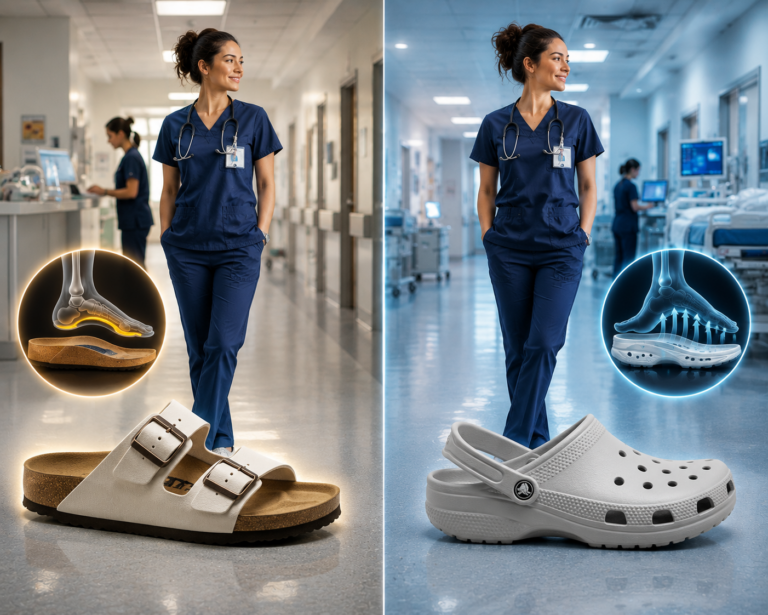
Some swear they’ll never wear anything except Dansko Professional clogs, praising their unmatched arch support and stability during long hours in the operating room or clinic.
Others wouldn’t trade their Crocs Work shoes for anything, arguing that nothing beats their lightweight cushioning, easy cleaning, and all-day comfort during busy emergency room shifts.
So, who’s right?
The truth is that both brands are excellent—but they solve different problems.
If you need maximum support and spend most of your shift standing in one place, Dansko may be the better investment. If you’re constantly moving from room to room and prefer lightweight footwear that feels soft underfoot, Crocs may be the smarter choice.
In this in-depth comparison, we’ll look beyond marketing claims and compare Crocs and Dansko where it matters most:
- Comfort after a 12-hour shift
- Arch support and foot pain relief
- Slip resistance on hospital floors
- Weight and walking fatigue
- Durability and long-term value
- Cleaning and infection control
- Fit for different foot types
- Which shoe is best for different nursing specialties
By the end of this guide, you’ll know exactly which pair deserves a place in your locker.
Quick Answer
Choose Crocs if you:
✅ Walk more than you stand
✅ Prefer soft cushioning
✅ Have wide feet or bunions
✅ Want lightweight shoes
✅ Need an affordable option
Choose Dansko if you:
✅ Spend hours standing in one position
✅ Need excellent arch support
✅ Have plantar fasciitis or heel pain
✅ Want shoes that can last for years
✅ Prefer a more structured, supportive fit
Our Overall Recommendation
For most nurses, there isn’t a single “winner.”
- Best for walking: Crocs Work Collection
- Best for standing: Dansko Professional
- Best for plantar fasciitis: Dansko
- Best budget option: Crocs
- Best for wide feet: Crocs
- Best long-term investment: Dansko
Crocs vs. Dansko at a Glance
| Feature | Crocs Work Collection | Dansko Professional | Winner |
|---|---|---|---|
| Overall Comfort | ⭐⭐⭐⭐⭐ | ⭐⭐⭐⭐☆ | Crocs |
| Arch Support | ⭐⭐⭐☆☆ | ⭐⭐⭐⭐⭐ | Dansko |
| Cushioning | ⭐⭐⭐⭐⭐ | ⭐⭐⭐⭐☆ | Crocs |
| Stability | ⭐⭐⭐☆☆ | ⭐⭐⭐⭐⭐ | Dansko |
| Weight | Very Light | Heavy | Crocs |
| Slip Resistance | Excellent | Excellent | Tie |
| Break-in Period | None | 1–2 Weeks | Crocs |
| Easy to Clean | Excellent | Good | Crocs |
| Durability | Good | Excellent | Dansko |
| Wide Feet | Excellent | Good | Crocs |
| Plantar Fasciitis | Good | Excellent | Dansko |
| Price | Lower | Higher | Crocs |
| Long-Term Value | Very Good | Excellent | Dansko |
Why Nurses Trust Both Brands
There are hundreds of shoes marketed to healthcare workers, but only a handful have earned a loyal following over decades.
Crocs and Dansko have become two of the most recognizable names in hospitals, clinics, and surgical centers—not because of flashy advertising, but because nurses keep recommending them to one another.
Even though they look similar at first glance, these shoes are built with completely different priorities.
Crocs focus on lightweight comfort and cushioning. Their work shoes are made from closed-cell foam that feels soft underfoot, making them a popular choice for nurses who spend the day walking long distances through busy hospital corridors.
Dansko takes a different approach. Instead of feeling soft, its signature clogs provide a firm platform with a rocker-bottom sole and structured arch support. The goal isn’t to create a pillow-like feel but to reduce strain by encouraging a more efficient walking motion and supporting proper foot alignment.
This difference explains why opinions vary so much. A shoe that feels perfect for an emergency room nurse constantly on the move may not be the best choice for a surgical nurse who stands almost motionless for hours.
Understanding these differences is the key to choosing the right shoe for your own work environment.
Meet the Contenders
Crocs Work Collection
When people hear the word Crocs, they often picture the colorful clogs with ventilation holes that have become popular for casual wear.
However, those aren’t the models most healthcare professionals rely on.
Crocs created an entire Work Collection specifically for nurses, doctors, chefs, and anyone who spends long hours on their feet.
Popular nursing models include:
- Crocs On-The-Clock Work Slip-On
- Crocs Neria Pro II
- Crocs Bistro Pro LiteRide
- Crocs Specialist II
Unlike Classic Crocs, many of these models feature enclosed uppers designed to help protect against spills while still delivering the lightweight comfort the brand is known for.
What Nurses Love About Crocs
One of the biggest advantages is their incredibly low weight.
Compared to traditional leather clogs, Crocs feel noticeably lighter, reducing fatigue during shifts that involve thousands of steps.
The proprietary foam cushioning also absorbs impact well, making hospital floors feel less harsh underfoot.
Other benefits include:
- Soft cushioning from the first wear
- No break-in period
- Easy to clean with soap and water
- Water-resistant materials
- Comfortable for wide feet
- Affordable compared to many premium nursing shoes
Potential Drawbacks
Despite their comfort, Crocs aren’t perfect.
Because the foam is softer, it gradually compresses over time. Nurses who work full-time often notice reduced cushioning after months of daily use.
They also provide less rigid arch support than structured clogs, which may not suit people dealing with chronic plantar fasciitis or severe overpronation.
Crocs are best for:
- Emergency room nurses
- Pediatric nurses
- Home healthcare professionals
- Nursing students
- Nurses who walk throughout their shift
Dansko Professional
If Crocs are known for softness, Dansko is known for support.
For more than three decades, Dansko Professional clogs have been a familiar sight in hospitals around the world.
Their distinctive design combines a leather upper, a roomy toe box, a rocker-bottom sole, and a firm footbed intended to support long hours of standing.
One thing surprises many first-time buyers: the shoe doesn’t hug your heel tightly.
This slight heel movement is intentional. Dansko designs its Professional clogs with a small amount of heel lift to work with the rocker sole, allowing your foot to move naturally through each step. New wearers often mistake this for the wrong size, but a small amount of heel movement is considered normal for this style of clog.
Why Nurses Choose Dansko
The biggest reason is support.
Rather than sinking into soft foam, your foot rests on a stable platform that distributes pressure more evenly across the foot.
Many nurses who experience heel pain or plantar fasciitis appreciate this firmer, more supportive feel, especially during long shifts that involve extended periods of standing.
Other advantages include:
- Excellent arch support
- Durable leather construction
- Long lifespan with proper care
- Stable walking platform
- Professional appearance
- Slip-resistant outsole on many work models
Potential Drawbacks
The same features that make Dansko supportive can also make it feel less forgiving at first.
Many new users experience a short break-in period before the shoes become comfortable.
They’re also heavier than Crocs, and some nurses find that weight noticeable during shifts with constant walking.
Dansko is best for:
- Operating room nurses
- ICU nurses
- Surgical staff
- Clinic nurses
- Healthcare professionals with plantar fasciitis or chronic heel pain
Our Testing Criteria
To make this comparison genuinely useful, we’ll evaluate both brands using the factors that matter most during real hospital shifts—not just what’s written on the product page.
We’ll compare Crocs and Dansko based on:
- Comfort after 12 hours
- Arch support and foot stability
- Cushioning and shock absorption
- Slip resistance on wet hospital floors
- Weight and walking fatigue
- Durability over months and years of use
- Ease of cleaning and maintenance
- Fit for different foot shapes
- Overall value for money
Not every nurse has the same needs, so instead of looking for a universal winner, we’ll identify which shoe performs best for different work environments and foot conditions.
Crocs vs. Dansko: Head-to-Head Comparison
Now it’s time for the comparison you’ve been waiting for.
Both Crocs and Dansko are trusted by healthcare professionals, but they’re designed with different priorities. One focuses on lightweight cushioning, while the other is built around long-term support and stability.
Let’s see how they compare in the areas that matter most during a 12-hour shift.
Comfort: Which Feels Better After 12 Hours?
Comfort is subjective, but there are some clear differences once you understand how each shoe is built.
Crocs Work shoes use the brand’s proprietary Croslite™ foam, which creates a soft, cushioned feel from the moment you put them on. There is virtually no break-in period, and many nurses describe them as feeling like “walking on clouds.”
This makes Crocs especially appealing if your day involves constant walking between patient rooms, departments, or hospital wings.
Dansko Professional clogs take a completely different approach.
Instead of soft foam, they use a firm footbed and a rocker-bottom sole designed to encourage a smoother walking motion while reducing pressure on the feet and lower legs. They don’t feel plush, especially during the first few days, but many nurses say they become more comfortable after the break-in period.
During the First Week
Crocs
- Comfortable immediately
- No break-in period
- Soft cushioning
- Lightweight feel
Dansko
- Firm underfoot
- May feel stiff
- Break-in usually takes one to two weeks
- Heel movement can feel unusual at first
After a Full Shift
If your job involves walking 15,000 to 20,000 steps a day, Crocs often feel less tiring because they weigh significantly less.
However, if you spend hours standing in one operating room or treatment area, Dansko’s structured support may leave your feet feeling fresher by the end of the day.
Winner: Comfort
🏆 Crocs
For immediate comfort and walking-intensive jobs, Crocs take the win.
Arch Support: Which Is Better for Foot Pain?
Arch support is where these two brands differ the most.
Crocs provide moderate support combined with excellent cushioning. For nurses with healthy feet, this combination is often enough.
But if you’ve experienced plantar fasciitis, collapsed arches, or chronic heel pain, you may need more than soft foam.
That’s where Dansko shines.
The Professional clog features a firm, contoured footbed that supports the natural arch of the foot rather than allowing it to collapse throughout the day.
Many podiatrists recommend structured footwear for people dealing with overpronation or persistent heel pain, which explains why Dansko has built such a loyal following among experienced nurses.
Best for Common Foot Conditions
| Foot Condition | Better Choice | Why |
|---|---|---|
| Plantar fasciitis | Dansko | Firm arch support reduces strain on the plantar fascia. |
| Flat feet | Dansko | Better structure and stability. |
| High arches | Dansko | Supports the arch without collapsing. |
| Bunions | Crocs | Softer upper and roomier fit reduce pressure. |
| Swollen feet | Crocs | Foam and wider toe box feel more forgiving. |
| Heel pain | Dansko | Stable platform helps reduce heel stress. |
Winner: Arch Support
🏆 Dansko
If support is your top priority, Dansko is difficult to beat.
Weight: Does a Lighter Shoe Reduce Fatigue?
It might not seem like a few extra ounces matter, but after a 12-hour shift, every bit of weight counts.
Crocs Work shoes are made almost entirely from lightweight foam, making them noticeably lighter than traditional leather clogs.
That lighter design means less effort with every step.
Dansko Professional clogs, on the other hand, use leather uppers, reinforced construction, and thicker outsoles. While this adds stability, it also increases weight.
For nurses who spend most of their shift walking, those extra ounces can contribute to fatigue over thousands of steps.
Winner: Weight
🏆 Crocs
Lightweight construction makes them easier on your legs during walking-heavy shifts.
Stability: Which Shoe Keeps You More Secure?
Stability becomes especially important when you’re transferring patients, lifting equipment, or standing in one position for long periods.
This is where Dansko earns its reputation.
Its wider base and firmer construction provide a stable platform that helps reduce side-to-side movement.
Crocs, by comparison, allow more natural foot movement. While many nurses appreciate this flexibility, it doesn’t offer the same locked-in feeling as a structured clog.
Winner: Stability
🏆 Dansko
The firmer platform provides better overall support for prolonged standing.
Slip Resistance: Which Performs Better on Wet Hospital Floors?
Hospital floors aren’t always dry.
Water, cleaning solutions, and unexpected spills create slip hazards throughout the day, making reliable traction essential.
Many work-specific models from both brands are designed with slip-resistant outsoles, but it’s important to remember that not every Crocs or Dansko shoe is intended for professional healthcare use. Always check the specifications of the exact model you’re considering.
Crocs Work models such as the On-The-Clock and Bistro use tread patterns designed to improve grip on smooth indoor surfaces.
Dansko Professional clogs also feature slip-resistant outsoles on many healthcare-focused models, offering dependable traction in hospitals and clinics.
In everyday hospital conditions, both brands perform well when paired with the correct work model.
Winner: Slip Resistance
🤝 Tie
Choose a certified work model from either brand for dependable traction.
Durability: Which Lasts Longer?
Buying shoes isn’t just about the purchase price—it’s about how often you’ll need to replace them.
Crocs are built from foam, which naturally compresses over time.
After months of daily hospital use, the cushioning may become flatter, reducing the comfort that made them so appealing in the first place.
Dansko takes a different approach.
Its leather upper, durable outsole, and sturdy construction are designed for years of use with proper care. Many nurses report wearing the same pair for several years before replacing them.
Typical Lifespan
| Brand | Expected Lifespan* |
|---|---|
| Crocs Work | Around 6–18 months, depending on wear and foam compression. |
| Dansko Professional | Often 2–5 years with proper care and regular use. |
*Actual lifespan depends on work environment, walking distance, body weight, and maintenance.
Winner: Durability
🏆 Dansko
The higher upfront cost is often balanced by a much longer service life.
Cleaning & Infection Control
Hospital shoes don’t stay clean for long.
Whether it’s medication spills, disinfectants, or other workplace messes, easy cleaning is a major advantage.
Crocs have the edge here.
Because they’re made from molded synthetic materials, most Work Collection models can be wiped clean quickly with soap, water, or appropriate disinfectants recommended by the manufacturer.
Dansko’s leather uppers require a little more attention.
While they clean up well, repeated exposure to harsh cleaning chemicals can dry out the leather over time. Regular conditioning helps preserve their appearance and flexibility.
Winner: Cleaning
🏆 Crocs
They require less maintenance and are easier to keep looking clean.
Break-In Period: Which Feels Better Right Away?
One of the biggest surprises for first-time Dansko buyers is that the shoes may not feel comfortable on day one.
The firm footbed and rocker sole often require an adjustment period, especially if you’re used to soft athletic shoes.
Crocs don’t have this issue.
Most nurses can wear them comfortably from the first shift.
Winner: Break-In
🏆 Crocs
No break-in period makes them an easy choice for immediate comfort.
Long-Shift Performance
Here’s where your work environment really matters.
Choose Crocs if you:
- Walk between departments all day
- Cover more than 15,000 steps per shift
- Prefer a softer underfoot feel
- Have wide feet
- Need lightweight shoes
Choose Dansko if you:
- Stand for long periods in one location
- Work in surgery or procedural units
- Need strong arch support
- Have plantar fasciitis or chronic heel pain
- Want a shoe that can last for years
Comparison Scorecard
| Category | Winner |
|---|---|
| Comfort | 🟢 Crocs |
| Cushioning | 🟢 Crocs |
| Weight | 🟢 Crocs |
| Cleaning | 🟢 Crocs |
| Break-in Period | 🟢 Crocs |
| Arch Support | 🔵 Dansko |
| Stability | 🔵 Dansko |
| Durability | 🔵 Dansko |
| Long-Term Value | 🔵 Dansko |
| Slip Resistance | 🤝 Tie |
Current Score
Crocs: ⭐⭐⭐⭐⭐ (5 wins)
Dansko: ⭐⭐⭐⭐ (4 wins)
Tie: 1
At this point, the comparison is close—and that’s exactly what makes this debate so interesting. The best choice depends less on which shoe is “better” overall and more on how you work, how your feet are shaped, and what kind of support you need.
Which Shoe Is Best for Different Types of Nurses?
One of the biggest mistakes people make is assuming every nurse has the same workday.
An emergency room nurse, an operating room nurse, and a home health nurse may all work 12-hour shifts, but the way they move—and the demands on their feet—are completely different.
That’s why the “best” shoe depends on how you spend most of your shift, not just on the brand.
Emergency Room (ER) Nurses
Best Choice: Crocs Work Collection 🏆
ER nurses rarely stay in one place for long. Between responding to emergencies, transporting patients, and moving quickly from room to room, it’s common to log 15,000 to 20,000 steps in a single shift.
A lightweight shoe can make a noticeable difference over that distance.
Why Crocs work well:
- Lightweight construction reduces fatigue
- Soft cushioning helps absorb repeated impact
- Easy to clean after unexpected spills
- Comfortable right out of the box
Operating Room (OR) Nurses
Best Choice: Dansko Professional 🏆
Unlike ER staff, OR nurses often spend hours standing in one position while assisting with procedures.
When you’re barely moving, supportive footwear becomes more important than plush cushioning.
Many surgical nurses choose Dansko because the firm footbed and stable platform help reduce foot fatigue during prolonged standing.
Why Dansko stands out:
- Excellent arch support
- Stable rocker-bottom sole
- Durable leather construction
- Long-lasting support throughout lengthy procedures
ICU Nurses
Best Choice: Dansko (Slight Edge)
ICU nurses split their time between walking and standing.
Because they often remain at a patient’s bedside for extended periods, many appreciate the extra support that Dansko provides.
If you spend more time walking than standing, Crocs are still a strong alternative.
Pediatric Nurses
Best Choice: Crocs 🏆
Working with children often means moving quickly, kneeling, squatting, and staying active throughout the day.
Crocs feel agile and lightweight, making them a favorite among many pediatric nurses.
Labor & Delivery Nurses
Best Choice: Tie 🤝
Labor and Delivery shifts vary greatly.
Some shifts involve hours of standing beside a patient, while others require constant movement.
Choose based on your personal work style:
- Mostly standing → Dansko
- Mostly walking → Crocs
Home Health Nurses
Best Choice: Crocs 🏆
Home healthcare professionals frequently move between homes, drive throughout the day, and walk across a variety of surfaces.
A lightweight shoe is often the more practical choice.
Nursing Students
Best Choice: Crocs 🏆
Clinical rotations already come with plenty of expenses.
Crocs Work shoes offer excellent comfort at a lower price point, making them a smart option for students who need reliable footwear without overspending.
Best Shoe for Different Foot Conditions
Your foot shape and any existing pain matter just as much as your job title.
Here’s a quick guide to help you choose.
| Foot Condition | Recommended Shoe | Why |
|---|---|---|
| Plantar Fasciitis | Dansko | Firm arch support helps reduce strain on the plantar fascia. |
| Flat Feet | Dansko | Better stability and structured support. |
| High Arches | Dansko | Helps distribute pressure more evenly. |
| Wide Feet | Crocs | Roomier fit with less pressure across the forefoot. |
| Bunions | Crocs | Softer materials reduce friction around the bunion area. |
| Swollen Feet | Crocs | More forgiving fit during long shifts. |
| Heel Pain | Dansko | Stable platform can reduce heel stress. |
| Healthy Feet | Either | Choose based on whether you walk or stand more. |
Crocs Sizing vs. Dansko Sizing
Sizing is one area where many first-time buyers make costly mistakes.
Crocs
Crocs generally fit true to size with a naturally roomy toe box.
If you wear compression socks during your shift, you’ll usually still have enough space without sizing up.
They work particularly well for nurses with wider feet or those whose feet swell after several hours on the floor.
Dansko
Dansko sizing feels different from athletic shoes.
New wearers often believe they’ve purchased the wrong size because the heel lifts slightly while walking.
In reality, a small amount of heel movement is expected with many traditional Dansko clogs and helps the rocker sole function as intended.
The toe box should feel roomy, allowing your toes to move freely without sliding forward.
Common Mistakes Nurses Make
Even the best nursing shoe won’t perform well if you choose the wrong model or replace it too late.
Here are a few common mistakes to avoid.
Buying Classic Crocs Instead of Work Models
Classic Crocs are comfortable for everyday wear, but many hospitals require enclosed shoes without ventilation holes.
If you’re buying Crocs for work, look at the Work Collection rather than the casual models.
Choosing Shoes Based Only on Cushioning
A shoe that feels incredibly soft in the store isn’t always the best choice after twelve hours.
Some nurses benefit more from structured support than from extra cushioning.
Ignoring Your Foot Type
No shoe works for everyone.
If you have plantar fasciitis, flat feet, or chronic heel pain, prioritize support over softness.
If you have bunions or wide feet, comfort and toe-box width may matter more.
Waiting Too Long to Replace Your Shoes
Even if your shoes still look good, the support inside them gradually wears down.
If you notice increased foot fatigue, uneven outsole wear, or compressed cushioning, it may be time for a replacement.
Pro Tips from Experienced Nurses
Over the years, nurses develop small habits that make long shifts much easier.
Rotate Between Two Pairs
Instead of wearing the same shoes every day, alternate between two pairs.
This allows the cushioning to recover between shifts and can help extend the life of your footwear.
Wear Compression Socks
Many experienced nurses say compression socks improve comfort just as much as a good pair of shoes.
They can help reduce swelling, improve circulation, and lessen leg fatigue during long shifts.
Replace Insoles if Needed
If your shoe allows removable insoles, replacing them periodically can restore comfort without buying a brand-new pair.
Keep a Backup Pair at Work
Unexpected spills happen.
Having a clean backup pair in your locker can save the rest of your shift.
Frequently Asked Questions
Are Crocs good for nurses?
Yes. Work-specific Crocs are popular because they’re lightweight, comfortable, and easy to clean. They’re especially well suited to nurses who spend much of the day walking.
Why do so many nurses wear Dansko?
Many nurses appreciate the firm arch support and stable platform, particularly if they spend long periods standing or have ongoing foot pain.
Which lasts longer?
Dansko generally lasts longer due to its durable construction, while Crocs’ foam cushioning naturally compresses with regular use.
Which is better for plantar fasciitis?
For many people with plantar fasciitis, Dansko’s structured support is the better option. Individual needs vary, so consult a healthcare professional if you have persistent pain.
Can nurses wear Crocs with holes?
It depends on your workplace.
Many healthcare facilities require enclosed shoes without ventilation holes to help protect against spills and sharps. Always check your employer’s dress code before purchasing.
Are Dansko shoes heavy?
Compared with Crocs, yes. However, many nurses feel the added stability offsets the extra weight, especially during long periods of standing.
Which is easier to clean?
Crocs generally require less maintenance because they’re made from molded synthetic materials. Leather Dansko clogs benefit from occasional cleaning and conditioning.
Which shoe is better for wide feet?
Crocs often provide a roomier fit, making them a popular choice for nurses with wider feet or those who experience swelling during long shifts.
Final Verdict: Should You Buy Crocs or Dansko?
After comparing comfort, support, durability, weight, hygiene, and long-shift performance, it’s clear that there isn’t a one-size-fits-all winner.
The better choice depends on how you work and what your feet need.
Choose Crocs if you:
- Walk long distances every shift
- Prefer lightweight shoes
- Want soft cushioning from day one
- Have wide feet or bunions
- Need an affordable option that’s easy to clean
Choose Dansko if you:
- Spend hours standing in one place
- Need stronger arch support
- Experience plantar fasciitis or heel pain
- Want a durable shoe that can last for years
- Prefer a structured, stable feel over plush cushioning
Our Overall Recommendation
If you’re a new nurse and unsure where to start, Crocs Work shoes are a practical, comfortable, and budget-friendly choice for many roles.
If you’ve struggled with foot pain, spend much of your day standing, or value long-term support over immediate softness, Dansko Professional clogs are well worth considering.
The best nursing shoe isn’t necessarily the most expensive or the most popular—it’s the one that helps you finish every shift with less pain and more energy for life outside the hospital.